
Foreword
In a challenging and uncertain environment, the Lithuanian economy is demonstrating resilience and continues to follow a growth trajectory. Nevertheless, in the coming years we will see fluctuations, which is why under these conditions it is particularly important to maintain fiscal discipline so that we have sufficient room to respond to unexpected shocks.
Lietuvos bankas actively participates in the monetary policy decisions of the Governing Council of the ECB, which are of critical importance to the economic development of both Lithuania and the entire euro area. They are in line with the Eurosystem’s main objective of maintaining price stability by keeping inflation at 2% over the medium term. Currently, inflation in the euro area and its medium-term outlook are broadly in line with this level; therefore, the key interest rates of the ECB, which were cut eight times between 2024 and 2025, have remained unchanged since June of last year.
Since the Governing Council of the ECB makes its monetary policy decisions based on the data available at the time, we should remain open to various possible monetary policy decisions.
Lithuania’s economic growth will not be uniform, as the second-pillar pension reform and rising defence spending will lead to fluctuations. This year, our GDP growth is expected to reach 3.1%, but it will slow to 2.0% in 2027. In the broader context of the euro area, the economy of which is expected to grow by 0.9% and 1.3% respectively, this is indeed a good result. Average annual inflation is expected to amount to 5.1% this year, however, later in 2028 it will consistently decline to a 2.5% level, typical to an economy approaching the cost-of-living of Western countries.
Lietuvos bankas makes a significant contribution to financing the state’s needs. In 2025, through successful management of financial assets, we earned €84.74 million in profits and transferred a contribution of €71.12 million to the state budget. This is the third-largest contribution in the history of Lietuvos bankas.
Lithuania’s financial stability is sound. Capital buffers of banks are strengthened by continued high profitability, loan quality remains good, while lending to businesses and households is growing rapidly. Stress testing reveals that the banking sector would be able to withstand adverse economic scenarios.
The Lithuanian banking sector remains one of the most profitable across the EU, which increases its resilience to potential shocks. Although net interest income continued to decline, according to unaudited data, bank profits in 2025 amounted to €1.063 billion.
In 2023, Lietuvos bankas, in collaboration with the Ministry of Finance, drafted the Law on Temporary Solidarity Contribution, with a neutral impact on financial stability; the amount transferred under this Law to the state budget for 2023–2025 reaches €540 million.
Other financial market sectors also remain sound. The credit union and insurance sectors, management companies and financial brokerage firms are stable and profitable, the market for EMIs and PIs is growing, and the activities of consumer credit providers, pension funds and collective investment undertakings are expanding. This provides residents and businesses with greater access to financial services that suit their needs.
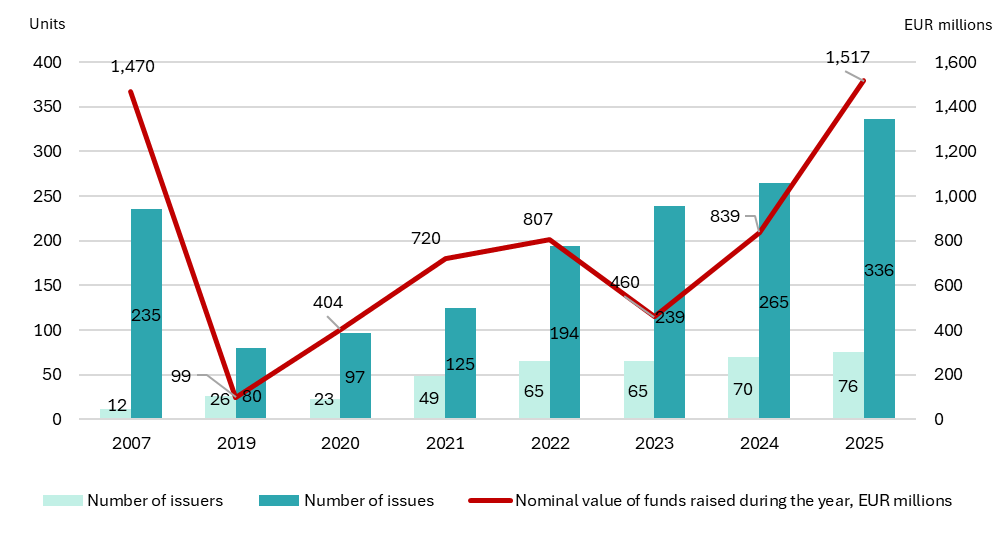
The Lithuanian capital market is experiencing a renaissance. In 2025, companies raised €1.5 billion through bonds, which is nearly 80% more than in 2024 (€840 million). Records are being broken in the crowdfunding market – based on the number of licensed crowdfunding service providers (16 licences at the end of 2025) and the amount funded (€278 million), we rank as the fifth jurisdiction in the EU.
The number of Lithuanian residents engaging in investment is growing significantly – it has increased more than 4.5 times over the past five years and is approaching 200,000. Investment portfolio management services have become accessible not only to the wealthy: in 2020, only 300 investors had opted for such services, whereas now there are as many as 16,000 retail investors.
Our financial market supervision policy focuses primarily on the quality of services provided to consumers and on dialogue with financial market participants. More than 3,000 persons participated in consultation events held in 2025, and since 2021 the number of attendees has exceeded 10,000. A survey of selected financial institutions shows that they are striving to meet expectations by improving user experience for payment services and avoiding potential regulatory violations and operational shortcomings.
To strengthen the competitive environment of the country’s financial market, we are reviewing national supervisory requirements and easing the administrative burden. In doing so, we are guided by the principle of risk-based supervision – we apply more flexible regulation to lower-risk areas, which increases the attractiveness and competitiveness of Lithuania’s financial sector.
We already see the results of these efforts. Commerzbank, one of Germany’s largest banks, opened a branch in Lithuania in December 2024, followed by PKO Bank Polski, Poland’s largest bank, at the end of 2025. In recent years, other global market leaders, such as Revolut Group, Vinted Pay, UAB, DriveWealth Europe, Checkout Payments Group Limited, have also chosen Lithuania. Zilch, a unicorn in the UK financial sector, has announced its intention to acquire a specialised bank licensed in Lithuania.
One of the most important tasks accomplished in the regulatory domain – amendments to the Law on the Prevention of Money Laundering and Terrorist Financing related to simplified customer identification requirements in lower-risk cases drafted in collaboration with other institutions and financial market representatives and entered into force in July 2025.
With the entry into force of the EU Markets in Crypto-Assets Regulation at the end of 2024, we received a new supervisory mandate. We strive to ensure that only mature service providers with adequate knowledge of risk management in this business field enter this Lithuanian market. In 2025, we issued three licences for crypto-asset service providers, including the American-based company Robinhood Europe, UAB, the Canadian-based company Nuvei Liquidity, UAB, and UAB Decentralized, which has many years of experience in Lithuania and operates under the Coingate brand, and at the beginning of this year, we granted such a licence to the Lithuanian-owned company UAB Micar Assets. We are currently examining applications from other potential crypto-asset service providers.
A decision regarding the optimal composition and price of the basic payment account services package took effect at the beginning of 2025. Residents using this service can now withdraw more cash from ATMs and make more payment transfers, while the price of the package has been reduced by a third. This scope of services meets the needs of 90% of account holders in Lithuania.
In February 2025, a simpler and more affordable mortgage refinancing procedure initiated by Lietuvos bankas came into effect. According to data from Lietuvos bankas, more than 43,000 consumers have refinanced their mortgages or renegotiated their terms, with the total value of these loans approaching €4 billion. Together, they will save more than €240 million over the entire loan term.
Following the entry into force in May 2025 of amendments requiring lenders to offer customers at least two types of interest rates – variable and fixed – when presenting mortgage offers, residents more actively opt for fixed interest rates. Between January and April 2025, such loans accounted for an average of 1.5% of new mortgage loans, and in the second half of the year – an average of 6.1%.
We keep going and will keep coming up with ideas to give people more options for financial services that they need. Amendments to the Responsible Lending Regulations, which are crucial for housing loans, will take effect this August, easing the requirements for first-time homebuyers, thereby giving them better access to the housing market. At the same time, stricter requirements are established for investment property purchase transactions.
We have established stricter requirements for distributors of unit-linked life insurance products. Unit-linked life insurance products must be offered to residents, properly taking into account their needs and protecting them from potential financial losses.
Although the importance of cash is declining as alternatives develop and people’s habits change rapidly, cash remains an important means of payment for some residents. In this regard, we have launched initiatives to improve access to cash and banking services in the regions. We are also working with banks and collaborating with local governments. One option would be to expand the mandate of Lietuvos bankas by granting it the authority to set criteria for the accessibility of financial services and ensure their implementation.
We pro-actively fight against fraud. We encourage financial market participants to put in place advanced fraud prevention measures to prevent fraud attacks and resulting losses of both individuals and businesses.
Starting in October 2025, banks, credit unions, EMIs and PIs must, before executing a money transfer, verify that the payee specified in the payment order matches the holder of the designated bank account (IBAN). This measure allows the consumer who initiated the payment order to ensure that the funds are transferred to the intended payee.
Seeing that the current legal framework is insufficient, we have initiated legislative amendments to strengthen consumer protection and provide payment service providers with additional tools and responsibilities in combating financial fraud. The adoption of the draft laws that have already been prepared is expected during the spring session of the Seimas.
Lietuvos bankas will coordinate the development of a national-level fraud prevention strategy – an expert working group is being set up to discuss and prepare the content of the strategy and an action plan based on it. We take an active part in the inter-institutional working group coordinated by the Government of the Republic of Lithuania to combat fraud in the digital space and are also one of the initiators of the inter-institutional Memorandum of Cooperation aimed at minimising fraud in the digital space.
Security and resilience, along with increasing service accessibility, strengthening customer mobility and promoting innovation, are the key priorities of the Payments Market Strategy until 2030 developed by Lietuvos bankas.
We are working to introduce new payment products in Lithuania based on the SEPA Request-to-Pay (SRTP) scheme, or alternative European payment solutions for settlements among customers of different banks. This would not only promote competition among payment market participants but also help address the issue of intermediaries when collecting national and municipal taxes and fees.
We encourage people to pay more attention to the most crucial issues of personal finance management. To that end, we have established the Centre for Financial Literacy. On our website, we publish comparative information for residents, such as payment service fees, unit-linked insurance deduction calculator, interest rates on term deposits, savings deposits and irrevocable deposits offered by commercial banks and credit unions, as well as a calculator for housing loans.
We have actively informed the public and businesses about the rounding of cash payment amounts. Starting 1 May 2025, retailers and service providers are required to round the final total of a shopping basket when a consumer prefers to pay in cash. Lietuvos bankas has already received 37 million small-denomination coins, with a total weight of nearly 100 tons. This has led to simplified cash handling and reduced related costs, less costs for the state related to cash production and lower environmental impact associated with the production, transportation and use of small-denomination coins.
We are consistently contributing to the EU’s climate neutrality and low-carbon economy targets. Our goal is to make the financial assets of Lietuvos bankas not related to monetary policy climate-neutral by 2050 at the latest. When investing foreign reserves, we prioritise green investments and mitigate climate-related risks where this is consistent with the principles of investment security, liquidity and return.
Gediminas Šimkus
Chair of the Board of Lietuvos bankas
1.Strategy and objectives
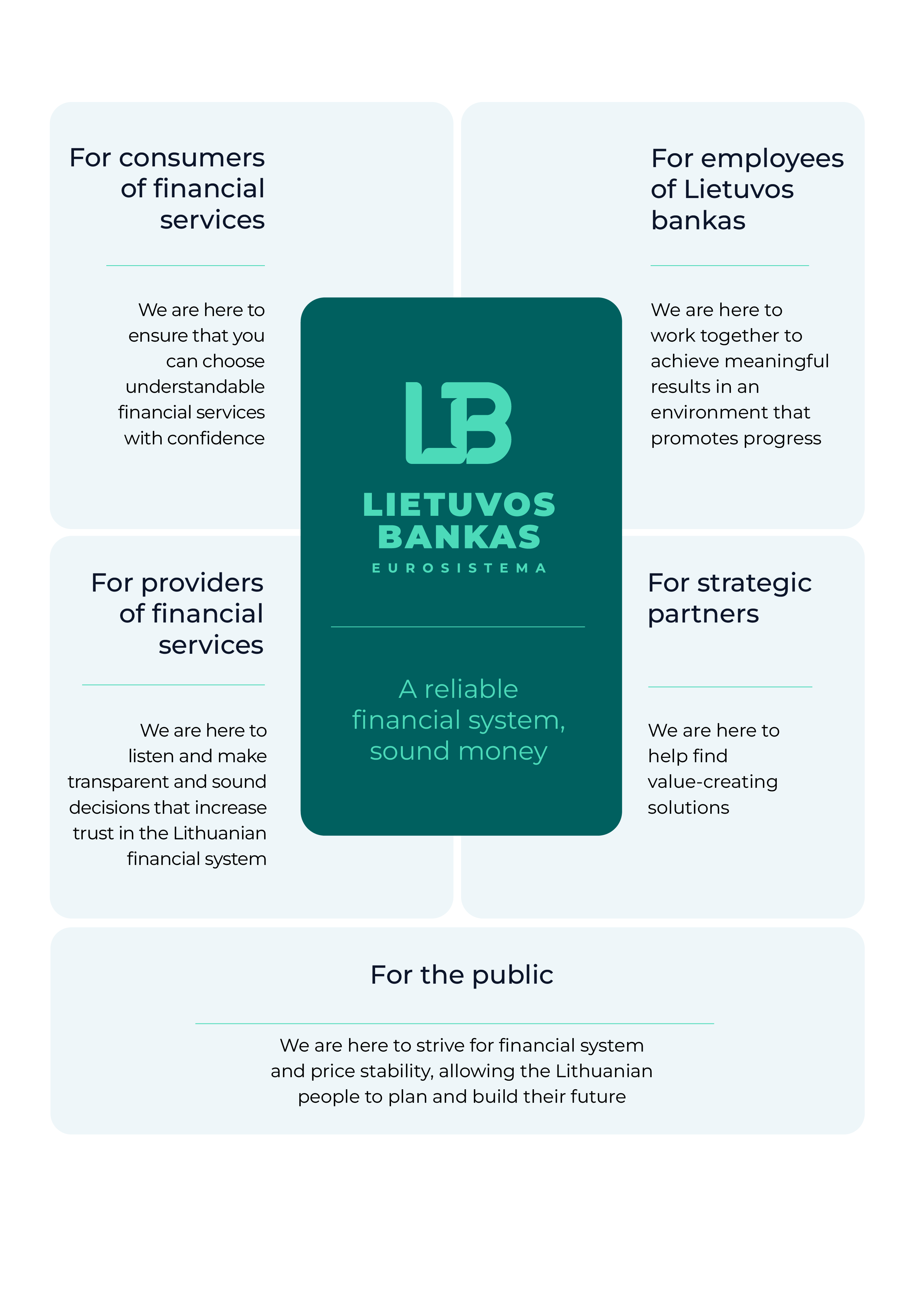
In 2025, Lietuvos bankas consistently implemented its 2022–2025 strategy, which focuses on creating value for participants in Lithuania’s financial ecosystem (stakeholders), including financial services consumers, financial services providers, the public, employees and strategic partners. During the reporting year, progress was made on all eleven publicly announced strategic objectives.
Consumers of financial services
·Consumer satisfaction. A high level of trust has been maintained among consumers of financial services. The number of complaints against financial market participants was extremely low (less than 2 out of 100,000 consumers filed a complaint). Consumer protection was consistently strengthened, dispute resolution practices were improved, and the accountability of market participants was increased.
·Fraud minimisation. The implementation of fraud prevention measures yielded results: while the fraud rate in the credit transfer sector remained higher than the EU average, it was below the EU median in the payment card segment. In 2025, preventive and risk management measures were further strengthened, and institutional cooperation and data analysis solutions were developed to enhance the security of the payments market.
·Accessibility of financial infrastructure and variety of services. According to the public opinion poll, assessments of the accessibility and variety of financial services improved: 60.7% of respondents rated accessibility positively, while 62.4% rated variety positively; the assessment of variety increased by more than 9 p.p. over the year.
Financial service providers
·Maturity of financial market participants. Greater market maturity has been achieved, particularly in the EMIs and PIs segments. Market dialogue practices have improved, and a consultative, data-driven supervisory model is being developed to enhance clarity and predictability of the regulatory process.
·Ensuring the functioning of the infrastructure. The reliability of financial market infrastructure remained high, with accessibility at 99.78%. Incident management and business continuity processes were further improved.
·Objectivity and efficiency of supervisory functions. An independent assessment by the Ministry of the Economy and Innovation of the Republic of Lithuania confirmed the high soundness and efficiency of supervisory decisions (grade “A”). The risk-based supervisory methodology was further improved, analytical capabilities were enhanced, and the digitisation of processes was accelerated.
Society
·Stability of the financial system. A strong macroprudential stance was maintained: the current level of macroprudential capital buffers remained sufficient to ensure resilience to identified risks, while capital adequacy ratios of institutions exceeded the established requirements. The level of imbalances (credit-to-GDP) remains below the risk-threshold, and the bank resolution readiness indicator remained high.
·Return on investment portfolio (return on financial assets). Despite geopolitical challenges, the three-year rolling return on Lietuvos bankas’ own financial assets stood at 15.57% in 2025, ensuring a responsible risk and return balance and sustainable management of financial assets.
·Stability of inflation in the euro area over the medium term. Average inflation in the euro area stood at 2%, and inflation expectations remained stable. This demonstrates the effectiveness of the Eurosystem’s monetary policy decisions and the achievement of the price stability objective.
Employees of Lietuvos bankas
·Employee engagement and organisational culture. The employee survey revealed a high perception of progress: more than 40% of respondents stated that they feel (or notice) progress in as many as 90% of the assessed operational aspects. The implementation of organisational transformation measures strengthened competencies, leadership and collaboration.
Strategic partners
·Data-driven positions for strategic partners. In 2025, Lietuvos bankas prepared four significant positions on key economic policy issues, including defence funding, changes to the pension accumulation scheme, the minimum monthly wage and tax reform. With its independent economic analysis and expert insights, Lietuvos bankas contributed to informed and data-driven public policy decision-making.
2.Economic and financial overview
2.1.Real economy
After a relatively rapid growth in the first half of the year, Lithuania’s growth slowed in the second half of 2025, but signs of recovery were observed by the end of the year. The State Data Agency estimates that the annual growth rate was 2.1% in the third quarter and 3.1% in the fourth quarter of 2025, with the quarterly growth rate reaching 0.3% and 1.7% respectively. As a result, by year-end 2025, Lithuania’s economy was 2.9 percent larger than a year earlier, growing slightly faster than the average over the past five years and nearly matching the long-term growth trend. The economic growth in 2025 was fairly broad-based, with value added increasing across most major economic activities. The largest contributions to GDP growth came from manufacturing, trade, and information and communications activities. Value added in manufacturing increased by 3.4% over the year, while growth in the information and communications sector was even faster and stood at 8.3%. Within manufacturing, the manufacture of machinery and equipment stood out for its particularly rapid growth, especially computer, electronic and optical products, which grew by about 32% over the year. The automotive industry as well as chemical and plastics manufacturing companies faced difficulties and contributed negatively to the annual industrial sector growth. Likewise, exports in these sectors show no signs of recovery. Value added in the trade sector increased, although household consumption grew moderately. The services sector remained one of the main drivers of economic growth, particularly due to the expansion of information and communication services. In 2025, the transport and storage services sector began to recover gradually, but the scope of its activities remained below pre-pandemic levels.
Contributions to real GDP (expenditure approach)
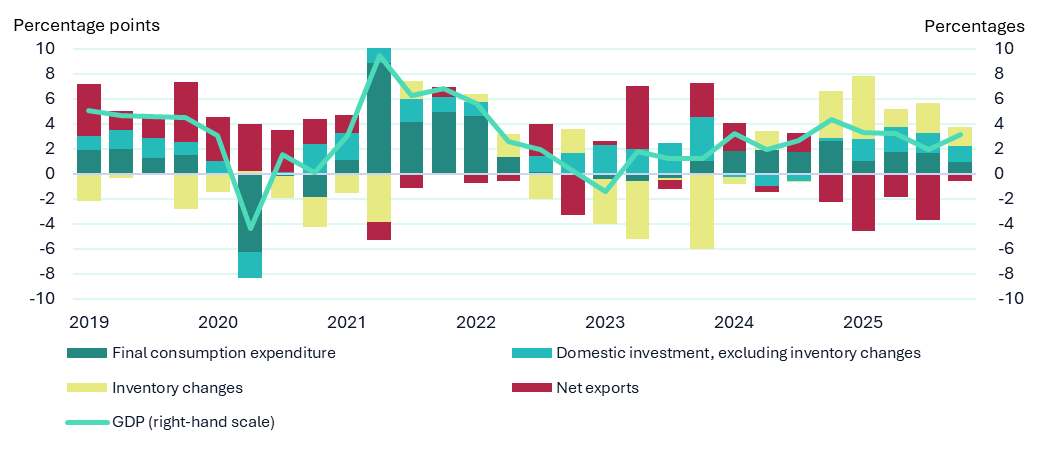
Sources: State Data Agency and Lietuvos bankas calculations.
Household purchasing power, which had grown rapidly in previous years, continued to support consumption in 2025, although the pace of growth had moderated. The labour market situation remained largely stable, but its development was no longer as favourable as before. Employment growth stalled, wage growth moderated, and real income growth was increasingly constrained by faster-rising prices. Nevertheless, household consumption continued to rise, increasing by 1.9% in 2025 and serving as a key driver of domestic demand. Consumer sentiment fluctuated significantly, deteriorating at the start of the year in line with trends observed across Europe amid trade tensions and heightened economic uncertainty. From mid-summer, consumer confidence recovered, leading to more favourable expectations regarding both their own financial situation and the country’s economic outlook. However, in December and at the beginning of the current year, this indicator weakened, reflecting somewhat more cautious short-term assessments by households.
Lithuania’s economic growth in 2025 was also supported by investments, which increased by 7.1% over the year. The growth was driven primarily by investment in vehicles, ICT equipment, and other capital goods. At the end of the year, investment growth was further bolstered by higher investments in non-residential buildings and engineering structures. The largest share of investment in the industrial sector was channelled toward the renewal of worn-out equipment and the technological base, the modernisation of production processes and the improvement of efficiency; these investments are expected to boost economic activity in the future. The expansion of production capacity remained important, but was more limited in scale. Investment decisions were primarily driven by a positive assessment of production demand, while financing and technological factors had a secondary, but still significant influence. Development in the construction sector was sluggish for most of the year, but activity picked up toward the end of the year. Civil engineering projects significantly contributed to this improvement, becoming one of the key drivers of recovery of the sector. At the same time, investment in residential construction remained lower, although financing conditions gradually improved and activity in the housing market increased.
2.2.Price dynamics
Driven by higher food commodity prices and larger tax increases, average annual inflation in Lithuania rose to 3.4% in 2025. Based on inflation measured at constant tax rates, tax changes in 2025 contributed 0.8 p.p. to average annual inflation. Following a jump at the beginning of the year, annual inflation fluctuated slightly in subsequent months but changed relatively little and fell to 3.2% by the end of the year. Food prices, including alcoholic beverages and tobacco, and services were the main drivers of inflation, while industrial goods and energy prices had only a limited impact.
HICP inflation and its contributions
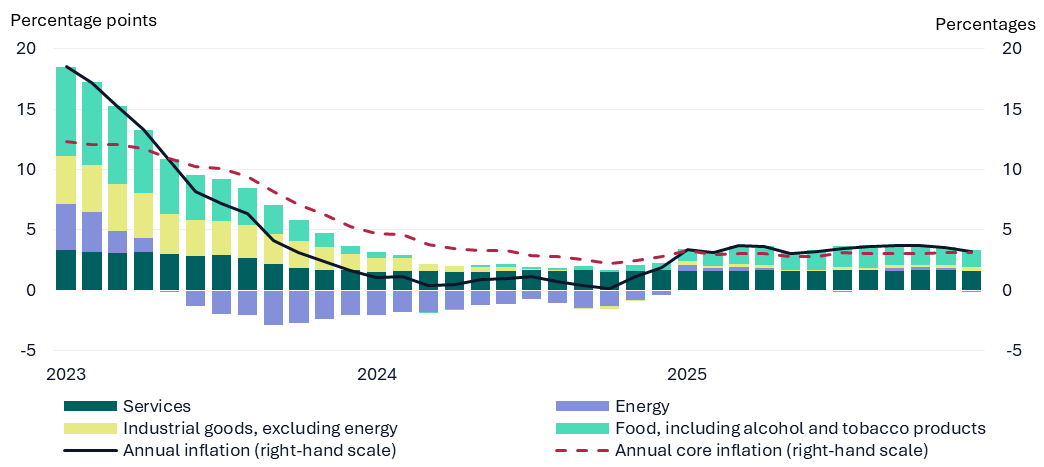
Sources: State Data Agency and Lietuvos bankas calculations.
With rising food commodity prices, prices of food, including alcoholic beverages and tobacco, increased at an average annual rate of 5.4% in 2025 (as compared to 0.9% in 2024), significantly contributing to higher average annual inflation. Purchase prices for agricultural products in Lithuania rose by 5.2%. In Lithuania and globally, higher food commodity costs passed through the supply chain, resulting in a 4.1% increase in food prices in Lithuania during the reporting period. Meanwhile, prices of alcoholic beverages and tobacco – goods subject to policies aimed at reduction of consumption – rose at an average annual rate of 8.1%, nearly twice as fast due to higher taxes, and were among the main contributors to the increase in food prices, including alcohol and tobacco.
Although the prices of energy resources fell in 2025, this effect was offset by higher taxes. Unlike in 2024, consumer energy prices no longer declined and were a key contributor to the increase in annual inflation. Consumer energy prices rose by an average annual rate of 0.8% (after declining by 9.6 % in 2024), with higher taxes contributing 3.7 p.p. to energy price growth. During the reporting period, heat energy prices recorded the fastest increase (8.6%), while electricity price developments were the most favourable for consumers, declining by around one-tenth.
Price pressures on industrial goods remained subdued in 2025, with industrial goods inflation remaining moderate (0.6%). Weak price pressures on industrial goods were evident at all key stages of the supply chain for industrial goods. For example, in 2025, domestic producer prices for manufacturing (excluding refined petroleum products) were 0.2% lower than in the previous year, and prices for imported consumer goods, both durable and non-durable, also remained largely unchanged over the year. As a result, industrial goods prices increased at a moderate average annual rate of 0.6% during the reporting period. Among the faster-growing product groups with a more significant weight in the consumer basket, pharmaceutical products stood out, with their prices rising at an average annual rate of 4% and contributing notably to industrial goods inflation.
With slower growth of wages, service prices also rose at a slightly slower (5.8%) average annual rate. According to preliminary data, wages in Lithuania grew in 2025 at an average annual rate of 8.4%, at a more moderate, but still relatively rapid pace. This also affected service price dynamics, as labour costs account for a significant share of total costs in the provision of services. Growth in service prices, which stood at 6.1% in 2024, slowed slightly, reaching 5.8% in 2025. Within the structure of service price growth, catering services are worth noting: despite contributing significantly to slower overall growth, they still accounted for about a quarter of the total increase in service prices. Prices of package holiday services, on the contrary, rose at a faster pace and accounted for about one-tenth of the total growth in service prices.
Against this backdrop of service and industrial goods price developments, core inflation, which is more closely linked to domestic factors and excludes the more volatile energy and food components, declined to 3.0% in 2025.
2.3.Labour market
Number of employed persons (diagram on the left) and annual change in average wage (diagram on the right)
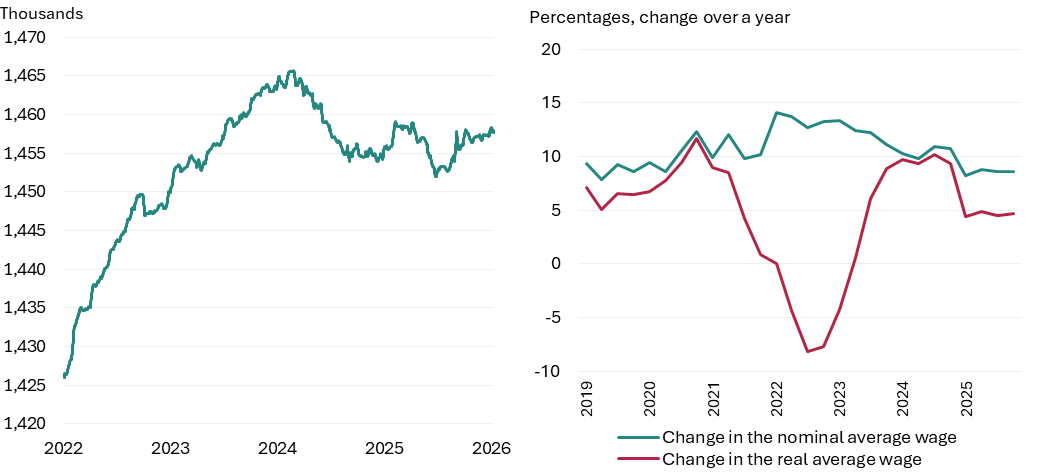
Sources: Sodra, State Data Agency and Lietuvos bankas calculations.
3.Monetary policy of the Eurosystem
3.1.Decisions
In 2025, the ECB Governing Council continued to lower the key interest rate, which reached 2.0% at its meeting in June (see figure). Over 2025, the ECB Governing Council cut the main (deposit facility) interest rate by a total of 100 basis points in four rounds, and, given the current trajectory of economic activity and inflation, has kept interest rates unchanged since June. In total, since the start of the rate-cutting cycle in June 2024, the main interest rate has been reduced from 4.0% to 2.0%. The decisions were taken in light of developments in euro area underlying inflation, inflation projections, monetary policy transmission and the prevailing risks. Moreover, as risks related to COVID-19 pandemic to monetary policy transmission and the euro area economic outlook have faded, the Eurosystem has discontinued reinvestments under the Pandemic Emergency Purchase Programme from the beginning of 2025, leading to a further decline in its bond holdings.
Actual data on interest rates and inflation in the euro area
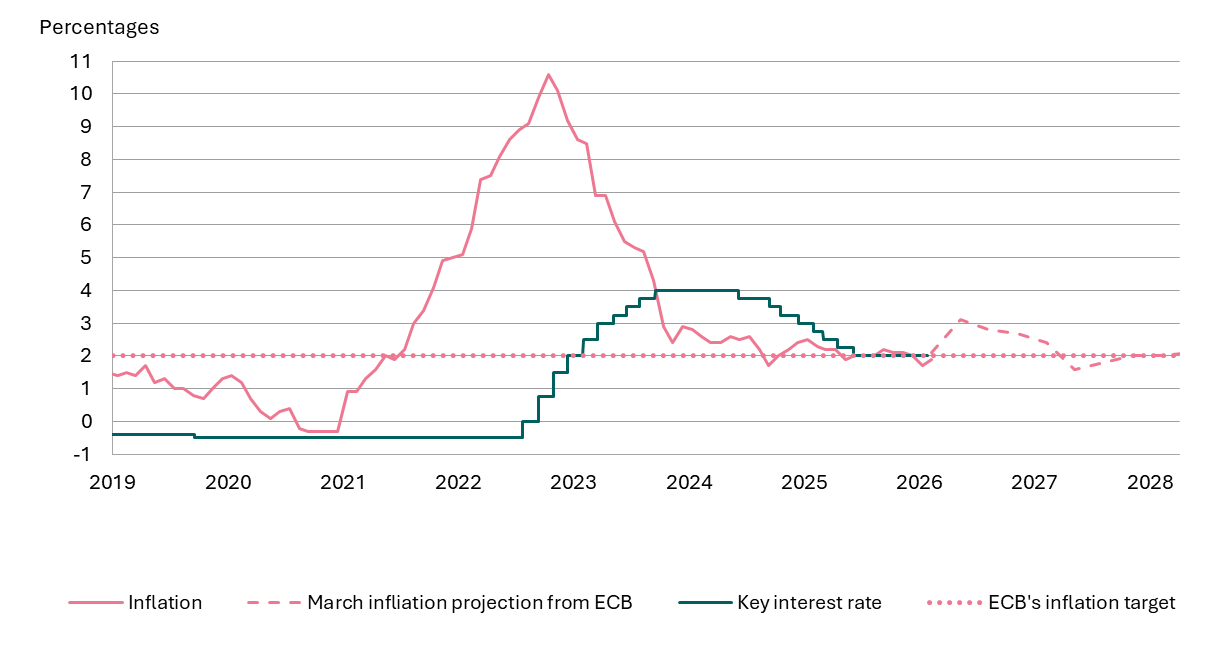
Sources: Eurostat, ECB and LSEG Workspace.
The ECB’s latest projections point to the elevated upside risks to inflation and downside risks to economic growth, particularly in 2026. Inflation continued to decline in 2025: annual inflation stood at 2.1% in December and at 1.9% in February 2026. This was driven by both the lagged effects of earlier monetary policy tightening and slower growth in compensation per employee, which is projected to decline from 3.9% in 2025 to 3.1% in 2028. Despite trade shocks, euro area growth in 2025 was not only resilient but also stronger than expected, reaching 1.5% (compared with the ECB's March projection of 0.9%). However, the current war in the Middle East has significantly increased uncertainty, heightening the risks of higher inflation and slower growth. The ECB’s forecasts in March indicate that annual inflation in the euro area is expected to rise to 2.6% in 2026 but should stabilise at around 2% to 2.1% between 2027 and 2028. Economic growth is also projected to be slower, at 0.9% in 2026, rising to 1.3% in 2027 and 1.4% in 2028. The unemployment rate is projected to remain low and broadly stable, at 6.3% in 2026–2027 and 6.2% in 2028, reflecting a resilient labour market. However, the economic environment remains clouded by increased uncertainty stemming from geopolitical tensions, rising energy prices and potential trade restrictions. The impact of the war on inflation and the economic outlook will depend on the intensity and duration of the conflict, as well as on effect of energy prices on the economy and consumer prices.
Macroeconomic indicators for the euro area in 2025 and their projection
(annual percentage change, excluding the unemployment rate)
|
Indicators |
2025 |
2026 |
2027 |
2028 |
|
Real GDP |
1.5 |
0.9 |
1.3 |
1.4 |
|
HICP |
2.1 |
2.6 |
2.0 |
2.1 |
|
Unemployment rate |
6.3 |
6.3 |
6.3 |
6.2 |
|
Compensation per employee |
3.9 |
3.4 |
3.2 |
3.1 |
Source: March 2026 ECB staff macroeconomic projections for the euro area.
3.2.Instruments
In 2025, the Eurosystem carried out 113 open market operations. At year-end, Eurosystem counterparties had borrowed €24.96 billion through the main refinancing operations with a maturity of one-week (compared with €8.88 billion at the end of 2024) and €11.75 billion through longer-term refinancing operations (compared with €17.19 billion at the end of 2024). Counterparties continued to actively use the overnight deposit facility. With the decline in excess liquidity, the use of the deposit facility decreased significantly over the year, amounting to €2,369.37 billion at the end of 2025 (compared with €2,851.01 billion at the end of 2024).
In 2025, counterparties of Lietuvos bankas participated in monetary policy lending operations for testing purposes, but had no outstanding borrowings at year-end, as was also the case at the end of 2024. Counterparties of Lietuvos bankas, like those of the Eurosystem, made use of the overnight deposit facility, with the outstanding deposits amounting to €12.70 billion at year-end (compared with €12.73 billion at the end of 2024).
Monetary policy operations of the Eurosystem and Lietuvos bankas
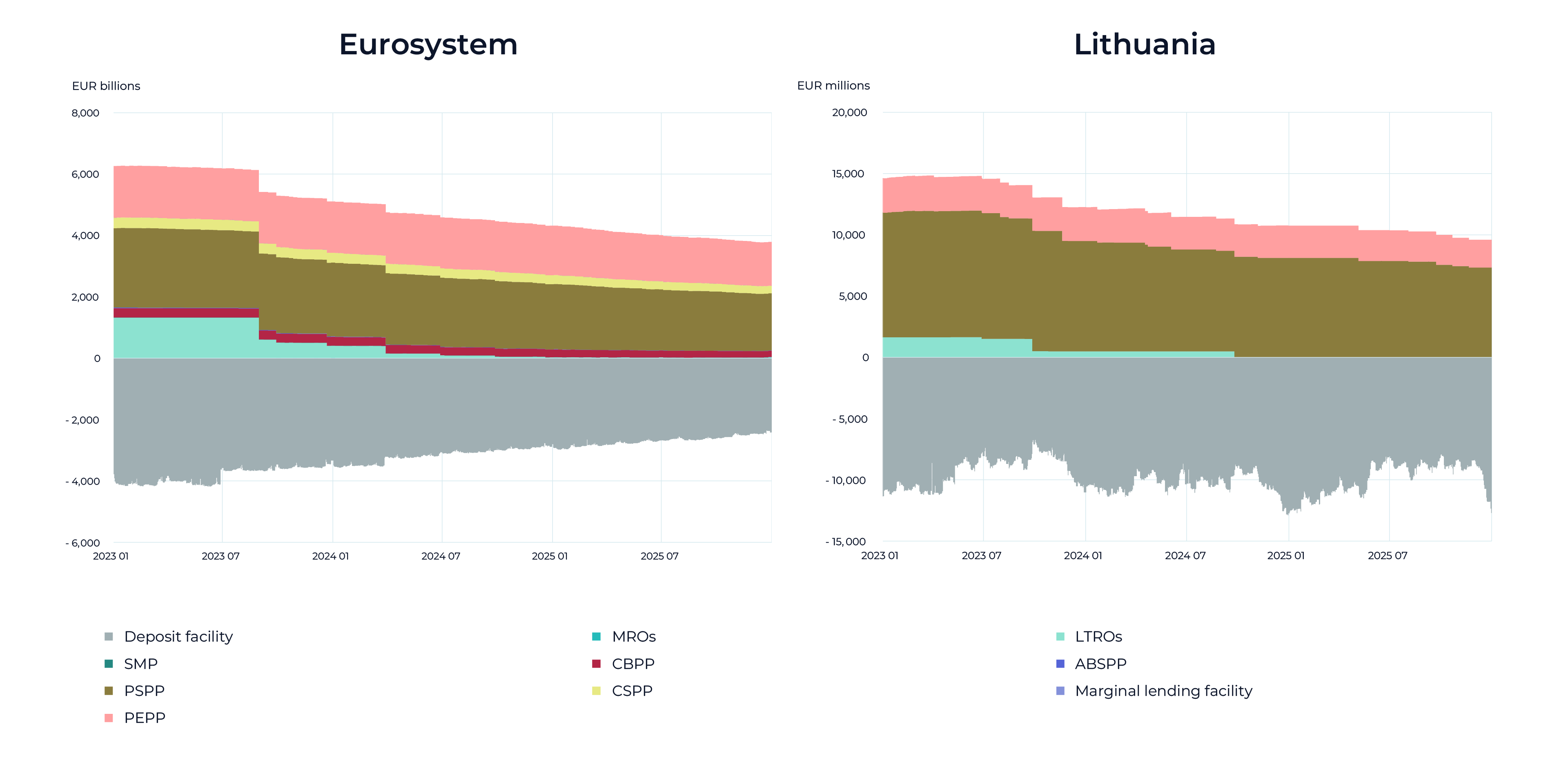
Sources: ECB and Lietuvos bankas calculations.
During the reporting period, the Eurosystem's monetary policy securities holdings declined by €539.0 billion, reflecting the discontinuation of purchases under the expanded asset purchase program or reinvestments under the asset purchase programs. The monetary policy securities holdings of the Eurosystem stood at €3,751.6 billion at the end of the year.
The monetary policy securities portfolio of Lietuvos bankas also declined by €1.2 billion to €9.6 billion at the end of the year, of which €5.4 billion consisted of securities issued or guaranteed by the Republic of Lithuania and €4. 2 billion consisted of bonds issued by European institutions.
Minimum reserves, current account holdings, recourse to deposit and marginal lending facilities
|
Indicator |
Region |
Volume at the end of the year, EUR |
Annual change |
Annual average, EUR |
Highest value, EUR |
Lowest value, EUR |
|
Minimum reserves |
Eurosystem |
168.8 billion |
2.9% |
167.1 billion |
168.8 billion |
163.9 billion |
|
Lithuania |
587.5 million |
15.5% |
545.5 million |
587.5 million |
509.0 million |
|
|
Current account holdings |
Eurosystem |
253.7 billion |
22.0% |
172.8 billion |
307.3 billion |
142.0 billion |
|
Lithuania |
819.8 million |
43.0% |
611.0 million |
1,267.1 million |
353.6 million |
|
|
Recourse to deposit facility |
Eurosystem |
2,369.4 billion |
-16.9% |
2,695.7 billion |
2,978.8 billion |
2,357.1 billion |
|
Lithuania |
12.7 billion |
0.0% |
9.9 billion |
12.7 billion |
7.9 billion |
|
|
Recourse to marginal lending facility |
Eurosystem |
0.0 billion |
– |
0.1 billion |
1.4 billion |
0.0 billion |
|
Lithuania |
0.0 million |
0.0% |
0.0 million |
1.0 million |
0.0 million |
Sources: ECB and Lietuvos bankas calculations.
3.3.Impact
Interest rates on loans continued to decline in the first half of 2025 and have remained broadly unchanged since June (see figure). The sharp rise in new lending rates in 2024 was followed by a steady decline, which accelerated in both the housing and non-financial corporation segments in Lithuania and across the euro area. This was driven by the ECB Governing Council's decisions to lower interest rates and expectations of further rate cuts in the future. From the beginning of 2025, interest rates on housing loans in Lithuania have fallen by about 0.53%, while those on loans to Lithuanian non-financial corporations have fallen by about 0.65%. Whereas the ECB’s key interest rates and the interbank EURIBOR have remained unchanged since June 2025, there have been no significant changes in lending conditions. Over 2025, the gap between housing loan interest rates in Lithuania and the euro area as a whole narrowed from 0.87 p.p. in December 2024 to 0.33 p.p. in December 2025 (see figure). This narrowing of the gap may reflect the fact that, historically, almost all housing loans in Lithuania (around 97%) carry variable interest rates (typically linked to 3, 6 or 12-month EURIBOR), while the euro area average is much lower (around 18%). Once the requirement for banks to offer housing loans with both variable and fixed interest rates for a period of no less than five years came into effect in May 2025, the levels of fixed and variable interest rates essentially converged. The future dynamics of interest rates on loans will depend not only on the monetary policy stance and the economic situation, but also on financial situation of banks and margin policies.
Average interest rates on new MFI housing loans and loans to NFCs
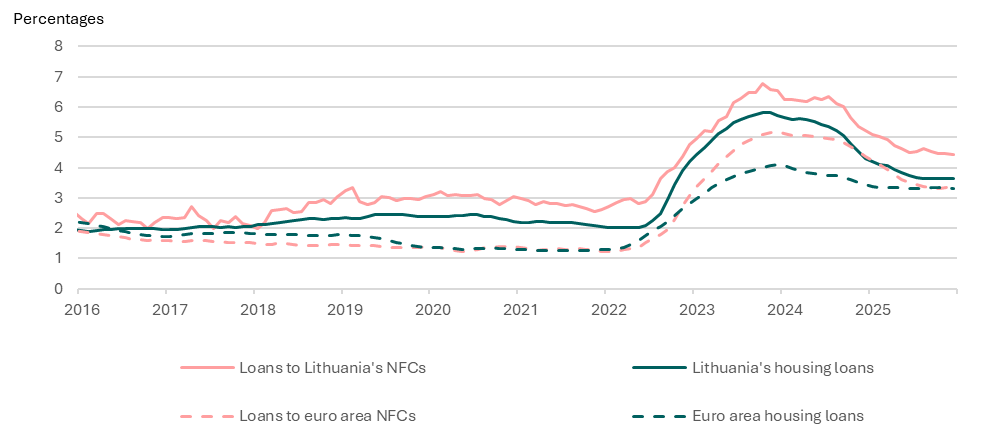
Sources: ECB and Lietuvos bankas calculations.
Notes: 3-month moving average. Excluding modifications of the existing loan agreements.
4.Financial stability
Geopolitical tensions and prevailing economic uncertainty remain among the most significant factors threatening financial stability, and, together with a potential correction in the real estate market and increased cyber threats, pose the main risks to Lithuania’s financial system. Although the Lithuanian economy has not been significantly affected so far, economic growth slowed in 2025. Economic uncertainty and geopolitical tensions pose a threat to the financial standing of the private non-financial sector, especially businesses, and a deteriorating financial situation could lead to difficulties in meeting financial obligations. On the other hand, the risk of default is mitigated by the sound financial standing of companies and accumulated reserves, while the potential impact on the banking sector is limited by the high quality of loans, a high loan-to-value ratio for corporate loans and low indebtedness of the sectors sensitive to declining export demand. In the residential real estate market, signs of tension were observed in the second half of 2025 due to significantly increased activity, rapid growth in housing prices and a potential decline in future supply. On the other hand, strong financial position of households and low indebtedness indicate resilience to potential risks. In the commercial real estate segment, risks stem from the continuing oversupply in the office segment and challenges related to debt refinancing; however, with banks only financing safe commercial real estate projects, credit quality remains good and potential bank losses should not significantly affect the financial system. At the same time, the risk of systemic cyber incidents remains elevated, given the rapid technological progress and the financial sector’s dependence on third-party IT services. On the other hand, in response to this, supervisory authorities are expanding the array of measures and strengthening cooperation at both the national and international levels.
Annual changes in the MFI loan portfolio to non-financial corporations and in the housing loan portfolio in euro area countries
(December 2025)
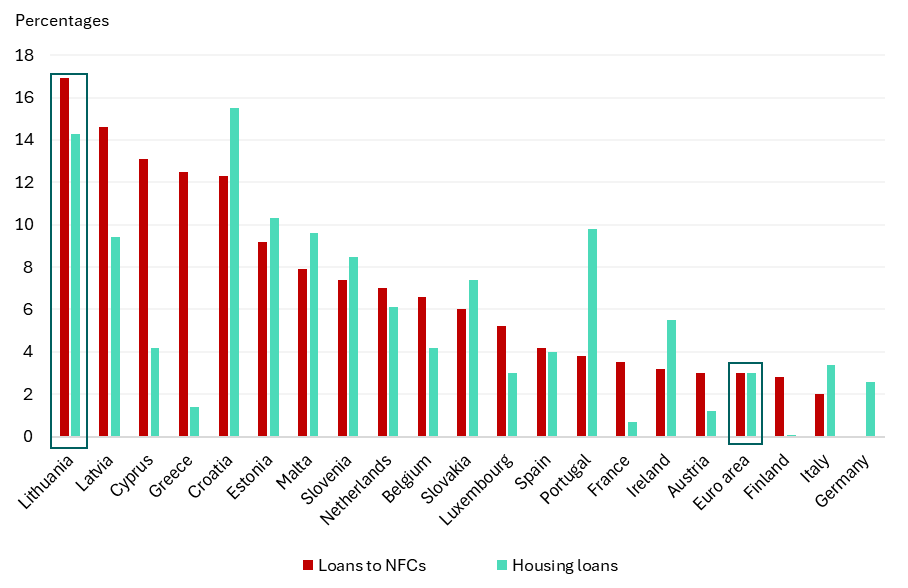
Source: ECB.
As borrowing costs fell, housing market activity in 2025 reached its highest level since 2021, and despite challenges in the office segment, a pickup is also seen in the commercial real estate market. In 2025, 20% more housing sales transactions were recorded than in 2024, with their number exceeding the long-term trend. Market activity was driven by home purchases with mortgages: in 2025, every second home purchase was financed by a loan (compared with every third home purchase in 2023, when loan interest rates reached their peak). As demand grew, annual house price growth exceeded 10% by the end of 2025 and was twice as fast as at the beginning of the year. House prices are already rising slightly faster than household incomes, but the gap is not large enough to significantly limit affordability and, historically, remains quite good. In 2026, changes to the second pension pillar and the RLR will have a positive impact on housing market activity. The commercial real estate market recorded a 30% increase in the number of transactions in 2025 compared to 2024. However, as low-value transactions dominated the market, investment activity remained near decade lows, while property prices remained largely unchanged over the year. The office segment is more vulnerable due to oversupply: the office vacancy rate in Vilnius stood at around 10% at the end of 2025 (for retail and industrial premises, the rates were 1% and 4%, respectively).
The preventive financial stability measures implemented by Lietuvos bankas are continuously reviewed and help ensure that the financial system is resilient to shocks and lending remains sustainable. The RLR ensures sustainable household debt levels and the ability to meet financial obligations even in an environment of rising interest rates. Macroprudential capital buffers increase banks’ resilience to systemic risks. A portion of those buffers could be released if the economy were to experience a shock or if cyclical risks were to occur, so that credit institutions could maintain the level of lending necessary for the economy.
Seeking to ensure that the impact of borrower-based macroprudential measures is more balanced across different borrower groups and more consistent throughout the interest rate cycle, Lietuvos bankas has made amendments to the RLR, which will take effect on 1 August 2026. After conducting a regular review of the framework of the RLR measures and identifying areas for improvement, on 22 October 2025, Lietuvos bankas approved amendments to the RLR, which will take effect on 1 August 2026. The adopted amendments include both easing and tightening measures, with the aim of ensuring a neutral impact on financial stability. As part of the RLR revisions, a down payment requirement of no less than 10% of the property value has been established for first-time homebuyers, replacing the previous 15% requirement. This more lenient requirement will provide greater opportunities for those who do not yet have a home to purchase one. For those taking out a second or a subsequent housing loan, with a previous housing loan still not repaid, the requirement for a down payment of no less than 30% will continue to apply. However, the revised exception allowing for a down payment requirement of less than 30%, but at least 15%, will apply when those seeking a second or a subsequent housing loan have already repaid more than half of the amount of each existing housing loan. Together, these changes will ensure a balance in the impact of down payment requirements between first-time homebuyers and those who already own a home. The review also found that, given the interest rate fluctuation, the combination of two debt-service-to-income (DSTI) ratio limits was overly procyclical. Therefore, a transition was made to a single 50% DSTI limit, which the borrower must meet in the case of an interest rate of no less than 6%. This will help borrowers better withstand potential interest rate increases in practice and ensure a more gradual impact of the requirement throughout the entire interest rate cycle. According to an econometric assessment conducted by Lietuvos bankas, if the proposed amendments to the RLR had taken effect in January 2025, the annual growth of housing prices and the housing loan portfolio would have been up to 0.8 p.p. and 2.3 p.p. faster, respectively, over the first three years. However, longer-term projections indicate that the housing market would likely adjust over time, and the initial impact of the changes would diminish.
The amendments to the Republic of Lithuania Law on Real Estate Related Credit, which took effect in 2025, significantly improved the functioning of the housing loan market and strengthened the position of consumers. The simplified and, in most cases, free refinancing procedure established as of 1 February 2025, removed the barriers that had previously limited consumer mobility and strengthened their bargaining power both when switching credit providers and when renegotiating interest rates. Since the beginning of 2024, when changes to the refinancing procedure were initiated, more than 43,000 consumers have refinanced their housing loans or renegotiated their terms. It is estimated that together they will save more than €230 million over the entire loan term. Overall, the housing loan segment saw record renegotiation activity in 2025, with nearly one-fifth of the housing loan portfolio being renegotiated. Additionally, as of 1 May 2025, a newly established requirement set for larger credit providers to make individualised offers with at least two types of interest rates – variable and fixed for a period of at least five years – and to regularly inform customers about market conditions ensures real choice and promotes competition. It has been observed that, following the entry into force of this requirement, offers of fixed interest rates have encouraged residents to opt for longer-term fixed interest rates more frequently: between January and April 2025, such loans accounted for an average of 1.5%, and in the second half of the year – an average of 6.1% of the new housing loans. These changes help address inefficiencies in the housing loan market caused by structural and other factors and ensure better consumer protection in the field of financial services, as well as a sustainable contribution of the financial system to economic growth.
5.Management of financial assets
The purpose of the management of financial assets is to ensure stability of the financial system, smooth implementation of the monetary policy, financial independence and provide a buffer against economic and financial shocks.
In 2025, the majority of the investments by Lietuvos bankas were in US dollar or other currencies (British pounds sterling, Canadian dollars, Australian dollars, Japanese yen and Swiss francs). Aiming at higher investment diversification, the currency risk of some investments (53% on average in 2025) was not hedged. The majority of investments with unhedged currency risk were in the US dollar (20%), British pound sterling (10%), Australian dollar (9%) and Canadian dollar (7%).
Average investment composition by currency in 2025
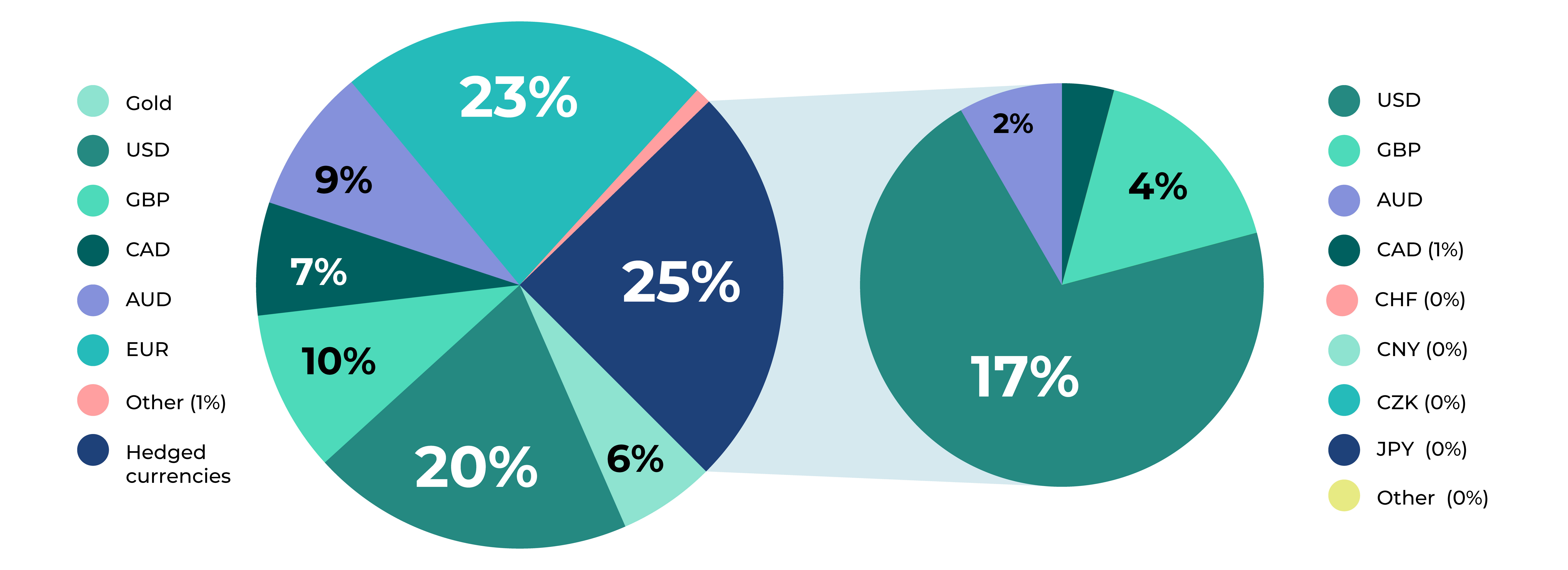
Source: Lietuvos bankas.
The security of financial assets is ensured through diversifying investments, concluding transactions with high investment rating financial institutions that are of good repute, and investing only in debt securities with a high investment rating. The investment grade rating assigned to financial institutions and issuers of debt securities by international rating agencies indicates low probability of default on their liabilities. At the end of 2025, 56% of investments were rated AAA (the highest rating).
In terms of financial instruments, the majority of investments made in 2025 were in government debt securities and money market instruments. Lietuvos bankas invested in securities issued by various governments, government agencies, international organisations and municipalities. Money market instruments mainly consisted of deposits with other central banks and international organisations. Lithuania’s gold is held at the Bank of England. Gold may be invested in gold deposits, thus earning interest, or through gold swaps, i.e. temporarily exchanging gold into other currencies and then investing them.
Average investment composition in 2025
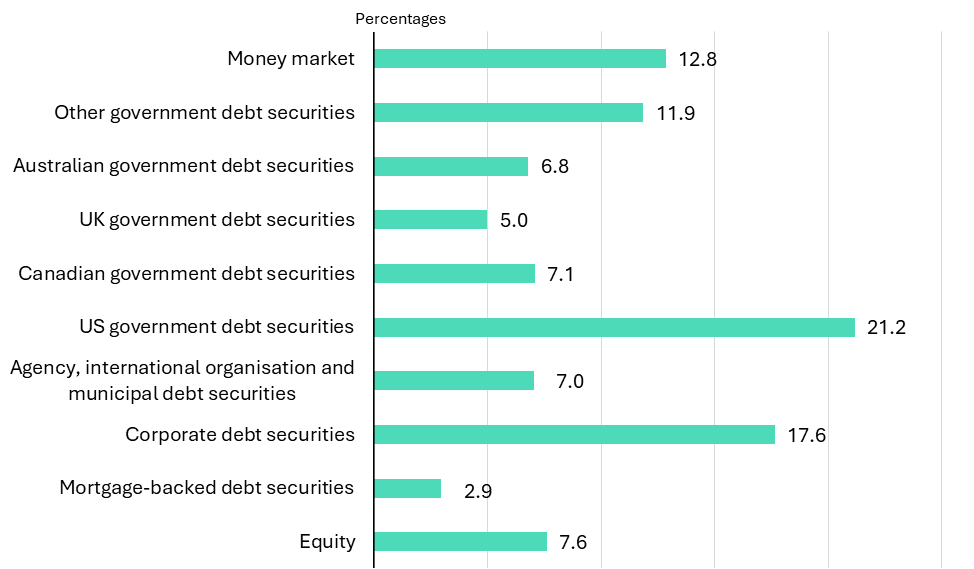
Source: Lietuvos bankas.
Lietuvos bankas invests financial assets with the aim of diversifying risk and increasing expected return over a three-year investment horizon. Due to potentially higher yields in the medium term, Lietuvos bankas tolerates the risk of a one-year loss, subject to the limits of the risk budget set out in its investment policy.
At the end of 2025, financial assets of Lietuvos bankas not related to monetary policy operations amounted to €7,432 million. The value of own financial assets (excluding liabilities) amounted to €6,748 million. The return on those assets was €212.2 million, or 2.06%.
Gold reserves remained unchanged and amounted to 5.8 tonnes. In 2025, the return on the gold portfolio reached 47.55%. This was significantly driven by a 65% increase in gold prices over the year, although the depreciation of the US dollar against the euro by more than 13% reduced the return.
Return on investment
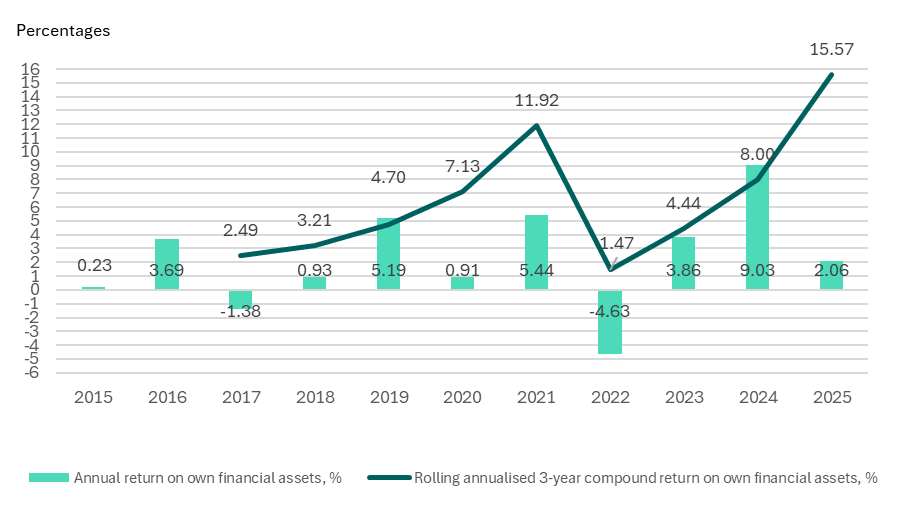
Source: Lietuvos bankas.
6.Supervision
6.1.Financial market participants
Lietuvos bankas supervises more than 900 financial market participants (FMPs). Reviews of the activities of FMPs and information about performance indicators are published on the website of Lietuvos bankas.
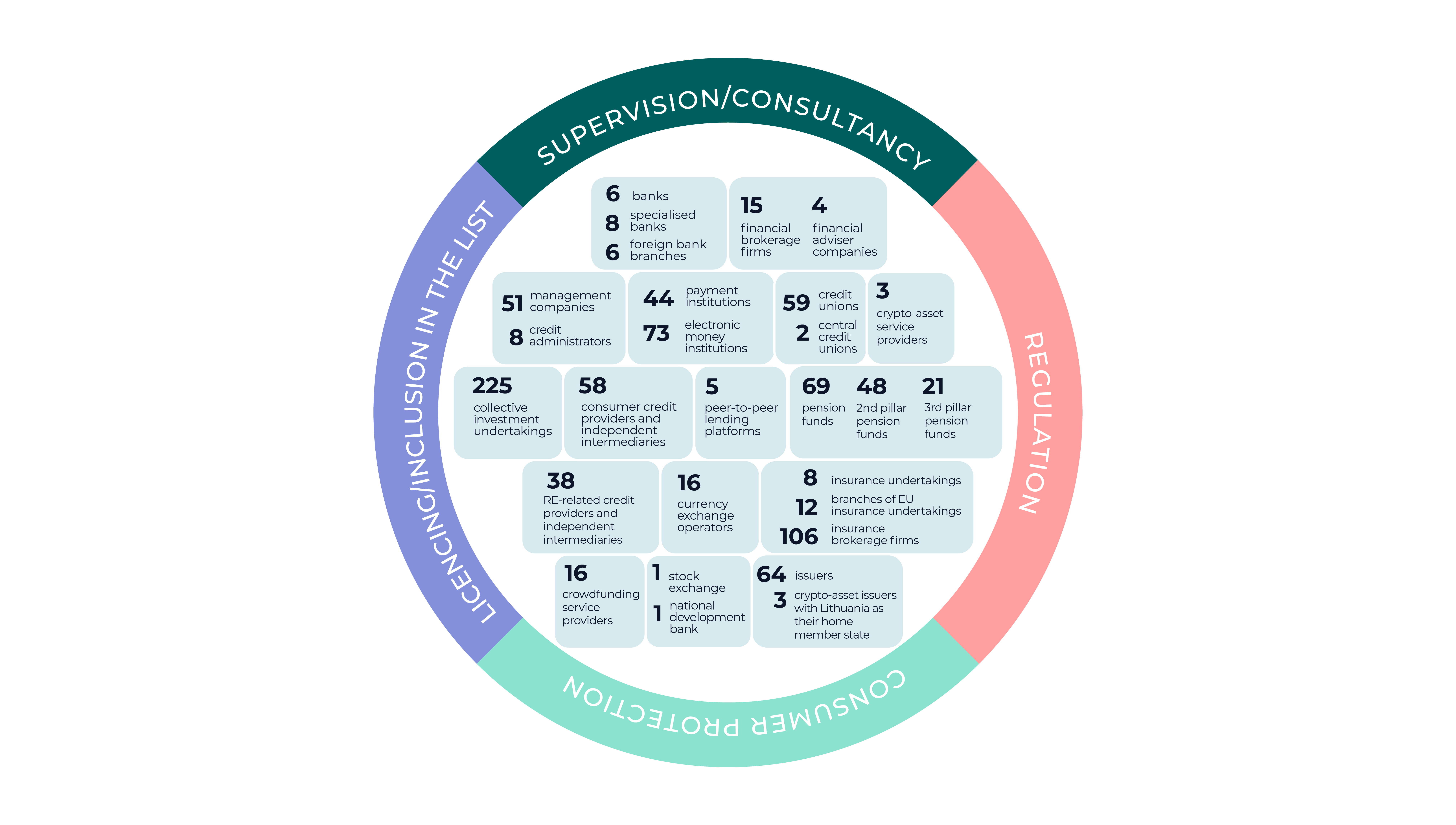
Source: Lietuvos bankas.
Note: Data of 31 December 2025.
In 2025, 42 new FMPs entered the financial sector. As many as 28 licenses (authorisations) were issued to EMIs, FBFs, MCs, credit administrators, etc. As many as 14 individuals (consumer credit providers, FBF intermediaries, credit intermediaries, etc.) were included in the public lists. Following the entry into force on 30 December 2024 of Regulation (EU) 2023/1114 of the European Parliament and of the Council on markets in crypto-assets, and amending Regulations (EU) No 1093/2010 and (EU) No 1095/2010 and Directives 2013/36/EU and (EU) 2019/1937, persons intending to carry out the activities of an asset-referenced token issuer or a crypto-asset service provider must obtain a license from Lietuvos bankas. To date, three licenses for crypto-asset service providers have been issued.
New licences and authorisations issued in 2025
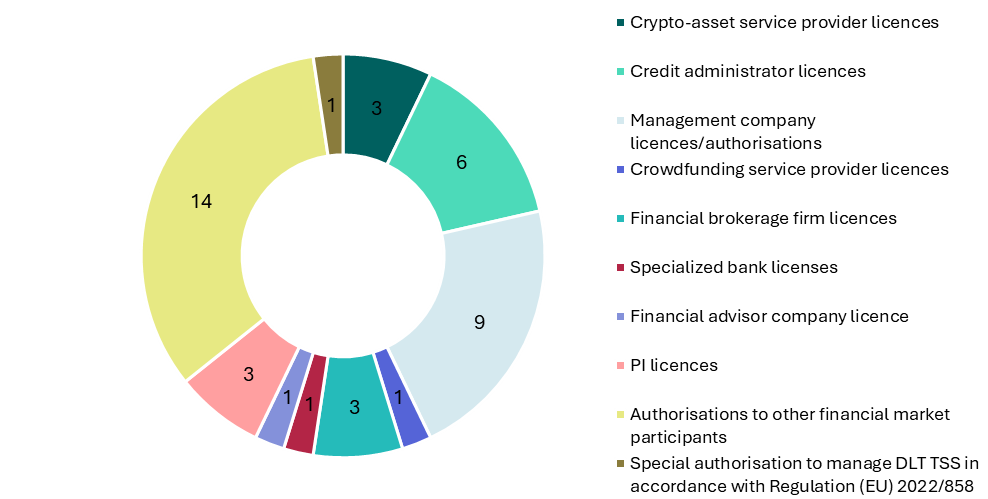
Source: Lietuvos bankas.
Notes: data of 31 December 2025. DLT TSS – Distributed Ledger Technology Trading and Settlement Systems.
6.2.Prudential supervision
Profits (left-hand panel) and deposits (right-hand panel) of the banking sector in 2021-2025
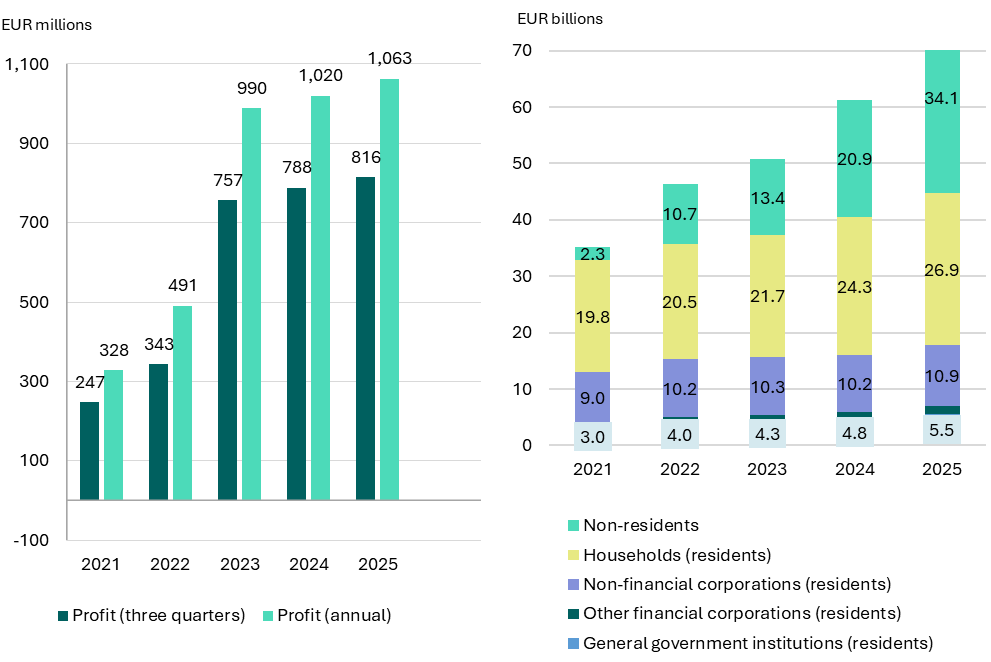
Source: Lietuvos bankas.
The credit union sector has maintained consistent and sustainable growth and profitability, while its maturity and role in the financial sector have increased significantly. Credit unions actively financed investments by small and medium-sized enterprises, as well as households' needs, supporting continued growth in lending. In 2025, loans granted by credit unions increased by €212.1 million, or 18.2%, accounting for 76% of credit unions’ assets. The deposit portfolio increased by €165.9 million, or 12.5%, over the year – the growing deposit portfolio indicates that the public appreciates the savings opportunities offered. According to unaudited data, credit unions earned €10.7 million in profit in 2025, i.e. €3.8 million less than in 2024. The main factors behind the decline in profitability were the increased cost of funding and reduced interest income due to lower loan interest rates.
Although the number of EMIs and PIs decreased compared to 2024 (one PI more and three EMIs less), the market continued to grow in terms of the total amount of payment transactions, revenue and other financial indicators. The net profit of these institutions amounted to €128 million. According to preliminary data for the fourth quarter of 2025, institutions’ revenue from licensed activities increased by 14% to €652.6 million, while the total amount of payment transactions rose by 8% to €166.3 billion (€153.4 billion in 2024). The five largest market participants in terms of the amount of payment transactions generated nearly half of the sector’s payment transactions amount (45%), while the five largest EMIs and PIs in terms of income from licensed activities earned 39% of all sector revenues. The assets of market participants grew by one-tenth over the year to €3.8 billion, of which customer funds accounted for €2.7 billion (71% of the total) and other institutional assets – for €1.1 billion (29%). During the reporting period, the share of customer funds invested in safe and liquid assets continued to grow – the amount was more than a third higher than in 2024 and reached nearly €1.1 billion. At the end of 2025, all institutions met equity capital requirements, with the capital adequacy ratio of 11 institutions ranging between 1 and 1.1.
Income related to the services of EMIs and PIs and the number of licensed institutions
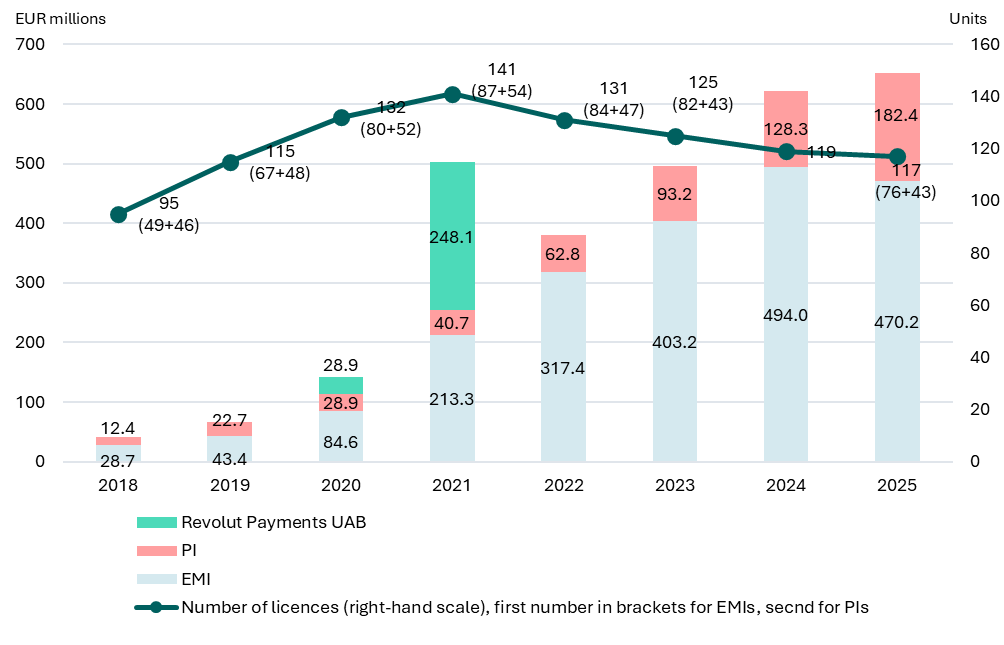
Source: Lietuvos bankas.
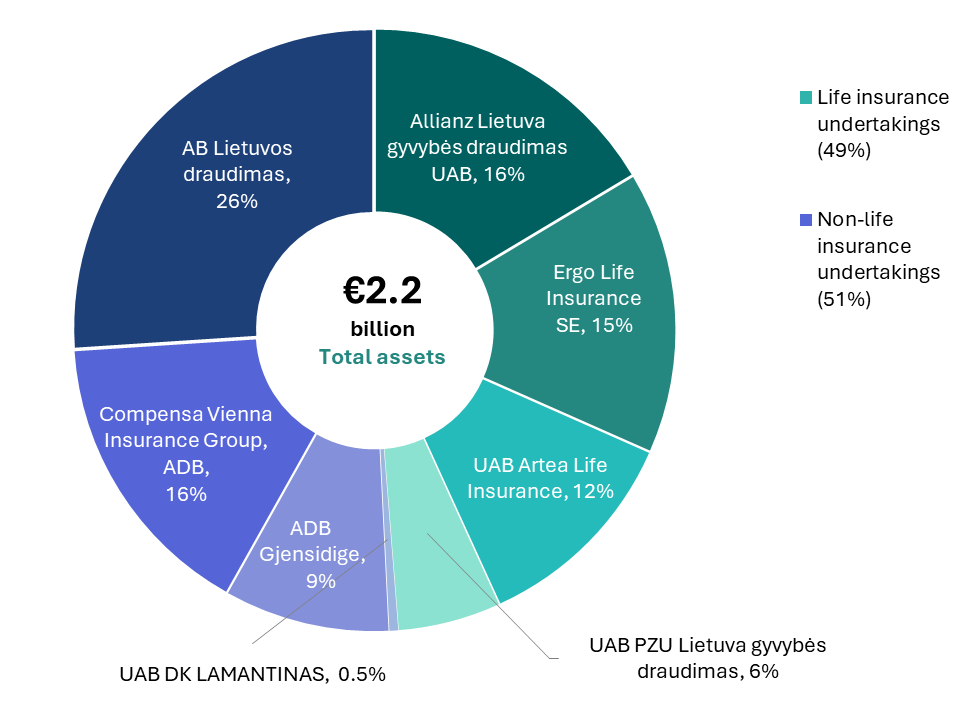
In 2025, the Lithuanian insurance market continued to grow, with all insurance undertakings licensed in Lithuania operating profitably and meeting the mandatory solvency capital requirements with sufficient margin. As at 31 December 2025, the solvency ratio of life insurance undertakings was 1.92 and that of non-life insurance undertakings stood at 1.60. All insurance undertakings licensed in Lithuania were profitable in 2025. According to unaudited financial statements, the aggregate profit of these undertakings (before taxes) amounted to €120.6 million (an increase of 21%). In 2025, the Lithuanian market recorded €1.73 billion in premiums and €0.93 billion in claims (premiums grew by 9.1%, i.e. at the same rate as in 2024, while claims grew by 4.7%, i.e. at half the rate). Non-life insurance continues to dominate the insurance market, accounting for 77% of total premiums in 2025. Non-life insurance premiums grew at a similar rate (10.1%) as a year ago, to €1.34 billion, with premiums increasing for all major types of insurance. Claims in the non-life insurance sector rose in 2025 by 4.6% to €0.71 million (at a 7 p.p. lower pace than in 2024). The slower growth in claims was driven by a decrease in property insurance claims due to more favourable weather conditions. The life insurance market grew at a more moderate pace in 2025 – premiums increased by 5.7% (to €391 million), with payments under unit-linked insurance contracts having the greatest impact on growth. Claims increased moderately, rising by 4.8% (to €215.6 million) – the main driver of this growth was an €8.2 million increase in unit-linked insurance claims under matured contracts. At the end of 2025, there were 106 insurance brokerage firms and two branches operating in the Lithuanian insurance market, of which 97 were profitable. Through insurance brokerage firms, nearly 42% of insurance contracts, i.e. 3.7 million, were concluded in the insurance market (as compared to 2024, the number of contracts increased by 10.2%). As usual, insurance brokerage firms were most active in the non-life insurance market.
Supervised insurance market by assets
Source: Lietuvos bankas.
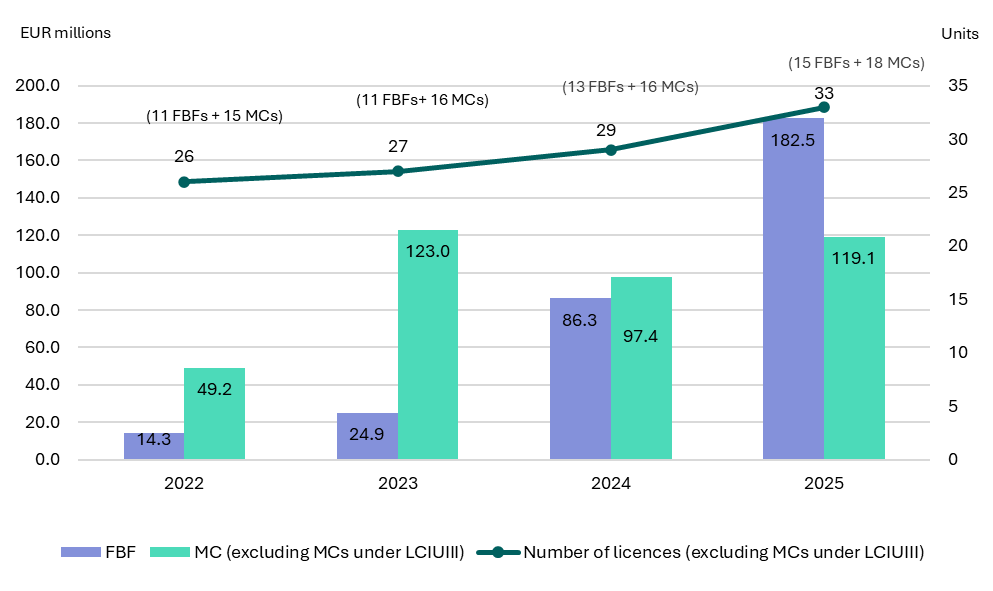
In 2025, the number of management companies (MC) (excluding CIUFIIs) increased to 18, and the number of financial brokerage firms (FBFs) went up to 16. The MCs assets increased by 22%, while those of FBFs more than doubled; the growth in assets in both sectors was driven by new market participants that launched active operations.
Number and assets of FBFs and MCs in 2022–2025
Source: Lietuvos bankas.
6.3.Financial services and market supervision
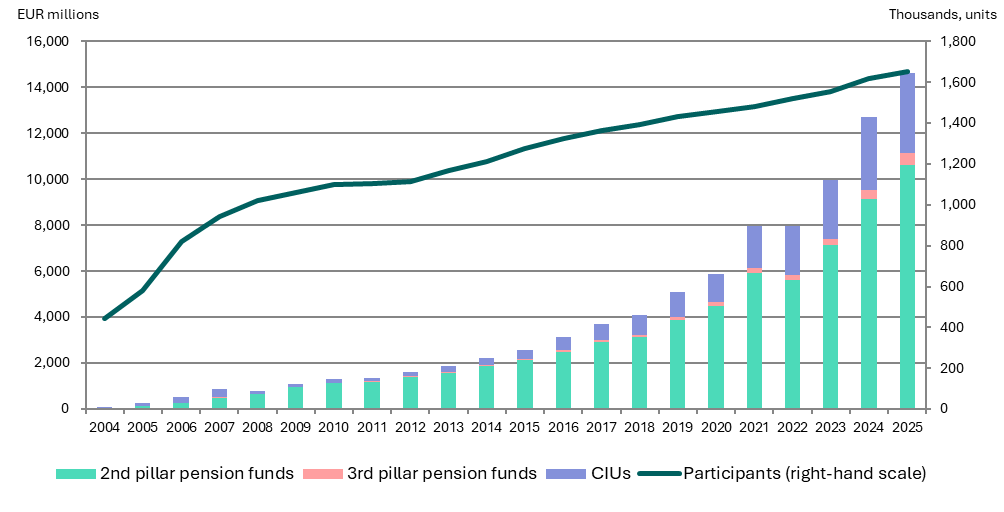
Pension funds (PF) and collective investment undertakings (CIUs and CIUFIIs) recorded positive returns, with an increase in accumulated assets and the number of contributors. The supervisory activities were mainly focused on preparations for the pension reform, including an impact assessment, an analysis of the development of second-pillar pensions, international practices and demographic trends, as well as the drafting and coordination of legislative amendments. Routine supervision was also carried out, including the monitoring of fund operations, disclosure quality and management practices, with a view to ensuring the protection of participants’ interests.
Assets and number of members of Lithuanian pension funds and CIUs
Source: Lietuvos bankas.
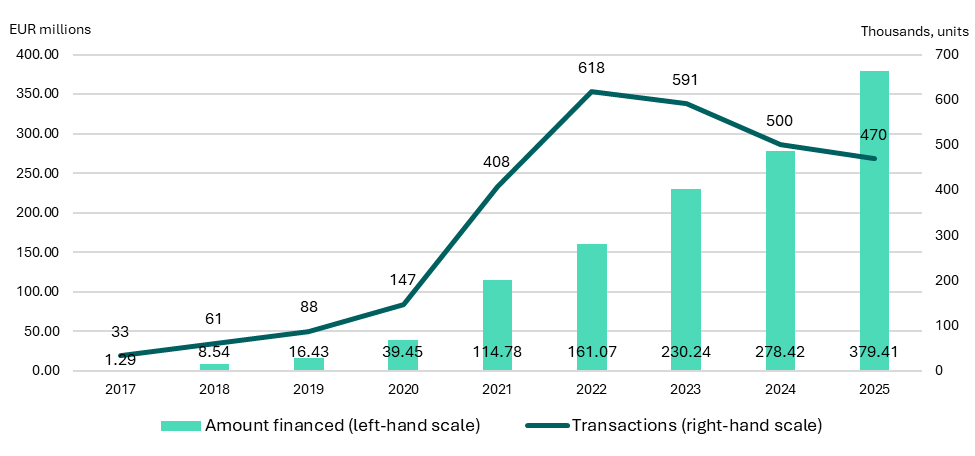
The market for crowdfunding service providers continues to grow. In 2025, one new crowdfunding platform was established (totally 16 platforms). After slowing in 2024, the growth of projects funded through crowdfunding picked up in 2025 – 2,948 projects were funded over the course of the year, with a total value of €379 million (an increase of 36.3%).
Amount and number of transactions financed by crowdfunding service providers
Source: Lietuvos bankas.
The portfolio of consumer credit providers (non-credit institutions), including peer-to-peer lending platform operators, grew by 1.3% in 2025, reaching €1.2 billion by the end of the year. Legal changes are planned for consumer credit providers. The Ministry of Finance has drawn up the Draft Law Amending the Law on Consumer Credit to transpose Directive (EU) 2023/2225 of the European Parliament and of the Council on credit agreements for consumers and repealing Directive 2008/48/EC into national law. The scope of Directive 2023/2225 is being extended (e.g. it will apply to hiring or leasing agreements with an obligation or an option to buy the property), changes to the requirements for information to consumers are being introduced, along new advertising requirements, principles of business ethics for creditors, etc.
6.4.Supervisory action and consultancy
Lietuvos bankas seeks to ensure a high quality of financial services provided to consumers. In carrying out its financial market supervision functions, Lietuvos bankas promotes mature and responsible FMPs' conduct that complies with regulatory requirements. To this end, consistent and risk-based FMPs supervision is conducted, encompassing on-site supervisory activities (inspections, assessment visits) and off-site (meetings with FMPs, written comments and recommendations regarding identified shortcomings or areas for improvement, etc.); consultative events and training sessions are also arranged on a regular basis. In 2025, Lietuvos bankas invited all interested FMPs to assess national regulation and submit proposals for its improvement, including specific comparisons with the legal frameworks of other EU countries. Feedback was received, evaluated in accordance with the principle of risk-based supervision, and is consistently acted upon. In reviewing the legal regulation, Lietuvos bankas is guided by the principle of risk-based supervision established in the supervision policy, according to which more flexible regulation applies to lower-risk areas in order to increase the attractiveness and competitiveness of Lithuania’s financial sector. This area remains a key strategic priority for Lietuvos bankas. Information about supervisory activities is available on the website of Lietuvos bankas.
In response to the FMP needs, Lietuvos bankas organised 14 stakeholder consultation events on various topics for different FMP groups in 2025. These events were attended by 3,118 market participants (an average of 223 participants per event), which shows consistent and active market engagement. Feedback confirms the effectiveness of these activities, as 80% of respondents who provided feedback indicated that the content of the events met their expectations. This leads to the conclusion that the organised events are relevant, focused on practical needs and contribute to compliance with legal requirements and the strengthening of best market practices.
Seeking to consistently improve its operations and meet FMP expectations, Lietuvos bankas continuously refines its financial market supervision processes. During biennial surveys, FMPs were invited to evaluate the effectiveness and transparency of supervision. The survey showed that supervision by Lietuvos bankas of the financial market is effective – 74% of respondents are satisfied with supervisory activities, 83% consider them effective, 88%indicate that their company is supervised appropriately and 99%note that they did not encounter any potentially corrupt situations between 2024 and 2025. These high satisfaction and favourable supervisory assessment indicators show that the supervisory model used by Lietuvos bankas is effective and meets the FMPs expectations.
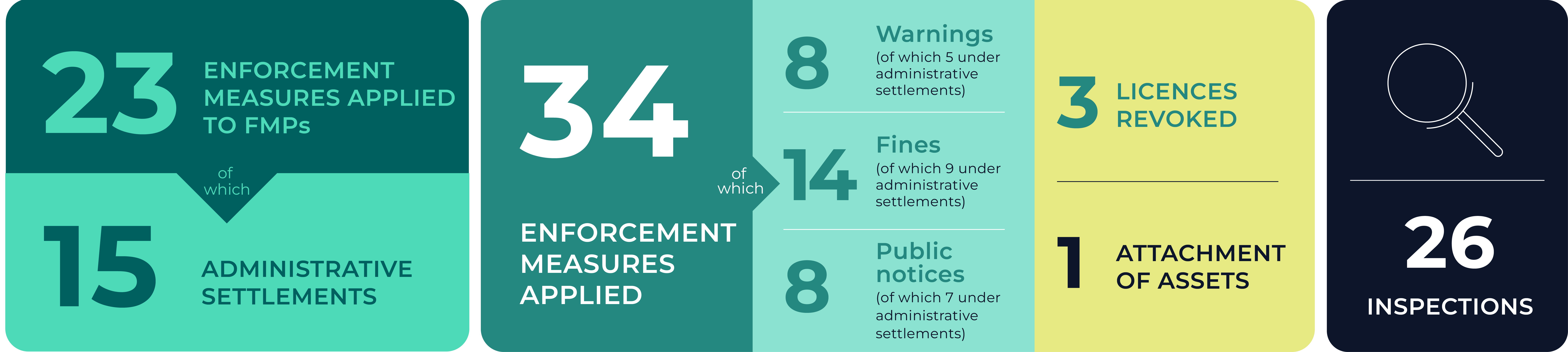
At the beginning of the year, Lietuvos bankas publicly announces the FMP inspection plan to ensure transparency in supervision and clarity of priorities. It sets out the areas to be inspected, planned timelines and priority areas, with a focus on compliance with AML/CTF requirements and the effectiveness of individual risk management. Lietuvos bankas, having identified regulatory violations and assessed their scope, duration and potential impact on the stability of the financial system and consumer interests, applies the enforcement measures set forth in the legislation. Enforcement measures are selected in accordance with the principles of proportionality and objectivity, with the aim of ensuring compliance with legislation, preventing the recurrence of violations and strengthening the reliability of the financial market. Coming into force of the amendments to the Republic of Lithuania Law on the Bank of Lithuania at the end of 2024 allowed for the conclusion of the procedures related to the application of enforcement measures through an administrative agreement. Once this procedure was implemented, 15 of the 23 enforcement measures applied to FMPs in 2025 through administrative agreements.
Enforcement measures applied and FMP inspections conducted in 2025
Source: Lietuvos bankas.
Note: Lietuvos bankas can apply one or several enforcement measures to the same FMP.
In 2025, the Regulation on digital operational resilience for the financial sector (DORA) came into effect in the financial sector. Following the entry into force of the Regulation, Lietuvos bankas assessed whether FMPs had strengthened their information and communications technology (ICT) risk management, updated their internal control systems, tightened supervision of ICT service providers and implemented security testing measures. DORA also fostered closer national and international cooperation – Lietuvos bankas joined the EU Systemic Cyber Incident Coordination Framework (EU-SCICF) and strengthened coordination with the National Cyber Security Centre. Nevertheless, growing dependence of the financial sector on IT service providers remains a significant risk factor for the resilience of the financial system.
In the reporting period, fraud prevention was one of Lietuvos bankas’ priority areas of activity. Assessment was carried out in relation to the implementation of the Fraud Prevention Guidelines, which entered into force in May 2024. Based on the results of the review and taking into account the growing scale of fraud, a package of legislative initiatives dedicated to this area was prepared. Lietuvos bankas also actively participated in interinstitutional cooperation initiatives: a Memorandum on Cooperation in Reducing Fraud in the Digital Space was signed on 27 March 2025, and an interinstitutional working group was established by order of the Prime Minister of the Republic of Lithuania on 5 November 2025 to coordinate the fight against fraud in the digital space. Additional preventive measures, including inspections, preventive meetings with FMPs and blocking of malicious websites, were implemented. Consumer education, provided through the Centre for Financial Literacy of Lietuvos bankas, also constituted an important part of the preventive measures.
In 2025, Lietuvos bankas continued to strengthen supervision in the financial sector regarding the implementation of AML/CTF and international sanctions. ML/TF risks were assessed in the financial sector and appropriate risk management/mitigation measures were applied. Inspections were conducted, meetings were organised with representatives of individual FMPs and their associations and compliance meetings were held with representatives of individual sectors to draw attention to the AML/CTF risks identified by Lietuvos bankas and during the National Money Laundering and Terrorist Financing Risk Assessment, as well as the measures for managing them; this information was also provided in writing to the heads of individual FMPs. Lietuvos bankas actively participated in drafting amendments and additions to the Republic of Lithuania Law on the Prevention of Money Laundering and Terrorist Financing, with the aim of establishing appropriate conditions for the implementation of a risk-based approach through AML/CTF measures, especially in the case of lower-risk products and services. Lietuvos bankas, together with the Ministry of National Defence, the Ministry of Economy and Innovation, the Financial Crime Investigation Service and the Association of Lithuanian Banks, signed a Cooperation Agreement aimed at improving the exchange of information on projects related to the development of defence and security industry products and on defence and security industry projects. The Agreement aims to strengthen dialogue between defence companies and financial institutions and provide credit institutions with an additional, reliable source of information to help them comply with AML/CTF and international sanctions requirements. Lietuvos bankas also actively participated in the activities of the Commission for Coordination of International Sanctions, the AML/CTF Coordination Commission, and working groups, as well as in the Baltic and Nordic-Baltic cooperation platforms.
During the reporting period, Lietuvos bankas actively prepared for the MONEYVAL assessment of Lithuania and the implementation of the EU AML/CTF package. In preparation for the upcoming evaluation by the Council of Europe’s Committee of Experts on the Evaluation of Anti-Money Laundering Measures and the Financing of Terrorism (MONEYVAL), which will be significant for the assessment of the national AML/CTF framework, and for the implementation of the EU AML/CTF package applicable as of 10 July 2027, preparatory actions were carried out at the national level and the FMPs were provided with relevant information. Lietuvos bankas also actively participated in international initiatives, such as working groups and committees of the European Banking Authority, as well as in the activities of the General Council and working groups of the Authority for Anti-Money Laundering and Countering the Financing of Terrorism (AMLA) that prepare implementing legislation.
In 2025, Lietuvos bankas strengthened its supervision of basic payment account services to ensure that consumers receive clear and fair information. Particular attention was paid to credit institutions providing this service to residents, ensuring that information regarding the composition of the service package, fees and terms of ordering and provision is presented a clear, comprehensible and non-misleading form. It was emphasised that any obstacles limiting consumer choice are unacceptable, and the selected financial institutions were asked to reassess how they are meeting Lietuvos bankas’ expectations regarding the improvement of the consumer experience. A mystery shopper exercise was conducted to assess, from a practical perspective, the quality of service at physical branches of banks as well as the accuracy and completeness of the information provided. Legislative initiatives are being prepared to increase the physical accessibility of financial services in the regions. EMIs and PIs that engage third parties in their operations have been also contacted regarding their obligation to ensure the provision of accurate and non-misleading information. In response to consumer complaints, supervisory actions were taken to ensure that identified violations and operational shortcomings are rectified and do not recur.
Lietuvos bankas operates in the financial market not only as a supervisory and regulatory authority, but also as an active participant in market development, strengthening competition, attracting new market participants and improving the regulatory environment. The aim is Lithuania’s becoming a jurisdiction with a strong reputation, ensuring high standards of market transparency and investor protection, with supervision and development being based on cooperation, openness to innovation and clear decision-making.
In 2025, the Capital Market Council (CMC) continued to implement the 2023-2025 guidelines and confirmed the benefits of further coordinated cooperation among institutions. The CMC, which brings together government institutions and market participant associations, contributed to the targeted strengthening of the capital market. In early 2026, new guidelines for capital market development are formulated for the next three-year period. In recent years, an increasing number of companies in the capital market have opted for financing through bond issues or crowdfunding platforms, and the number of investors and their activity has been growing.
The simplification of the regulatory environment continued to have a positive impact on the Lithuanian capital market. In 2025, the bond market grew rapidly – companies raised more than €1.5 billion through bond issues, reaching pre-crisis levels of 2007, while the number of issuers continued to rise, driven in part by the successful implementation by Lietuvos bankas, in collaboration with the Latvian and Estonian supervisory authorities, of an initiative to harmonise the information document requirements for public offering of securities up to €8 million. Over the past five years, the structure of bond issues has changed significantly, with issues of smaller volume and shorter duration taking prevalence in the market. In addition, an increasing number of non-financial sector companies are using an alternative to bank lending, i.e. access to capital markets. For example, in 2025, loans from financial institutions accounted for 82%, while bonds and crowdfunding accounted for 18% (88% and 12% respectively in 2024). First North, the Nasdaq Vilnius alternative market, is becoming increasingly popular among companies, especially for smaller issues, while demand for a large portion of public bond offerings, including real estate projects and renewable energy, is higher than supply.
Bond market (covering only securities issued by companies registered in Lithuania and securities issued in Lithuania, excluding government securities)
Source: Lietuvos bankas.
The study on the investor profile conducted in the reporting period shows an increase in the number of investors in 2024 and growing interest in bonds. The updated overview provides data on the FMPs registered in Lithuania and supervised by Lietuvos bankas in 2024, and assesses changes in the investment portfolios of Lithuanian investors. Read more in the Overview of the profile of the Lithuanian investor.
By strengthening the competitive environment and enhancing international appeal, Lietuvos bankas is attracting highly reputable and innovative market participants. In 2024-2025, Commerzbank, PKO Bank Polski, the Revolut Group, Vinted Pay, UAB, DriveWealth Europe, Checkout.com, Zilch and other international financial market participants launched operations in Lithuania or announced plans to expand, while interest in licensing remains steady. In 2025, 172 financial market participants were advised under the Newcomer Programme, primarily regarding licenses for the provision of EMI and PI services as well as crypto-asset services.
For 2026-2028, Lietuvos bankas has set clear directions for financial market development: strengthening the capital market and increasing retail investor activity, expanding corporate financing alternatives, particularly for small and medium-sized enterprises, and promoting the fintech sector and innovative business models. It is planned to continue systematic assessment of market gaps and implementation of measures to enhance the competitiveness of the Lithuanian financial sector.
7.Settlement of disputes between consumers and financial market participants
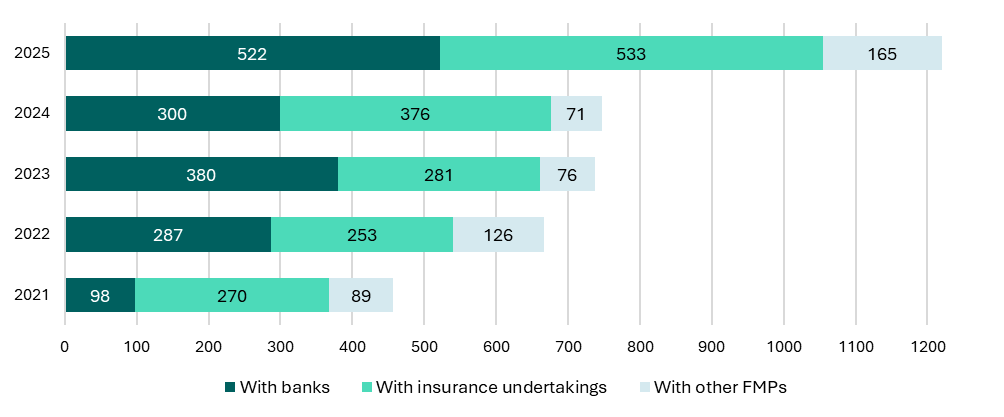
Requests for dispute settlement received by type of FMP
Unit
Source: Lietuvos bankas.
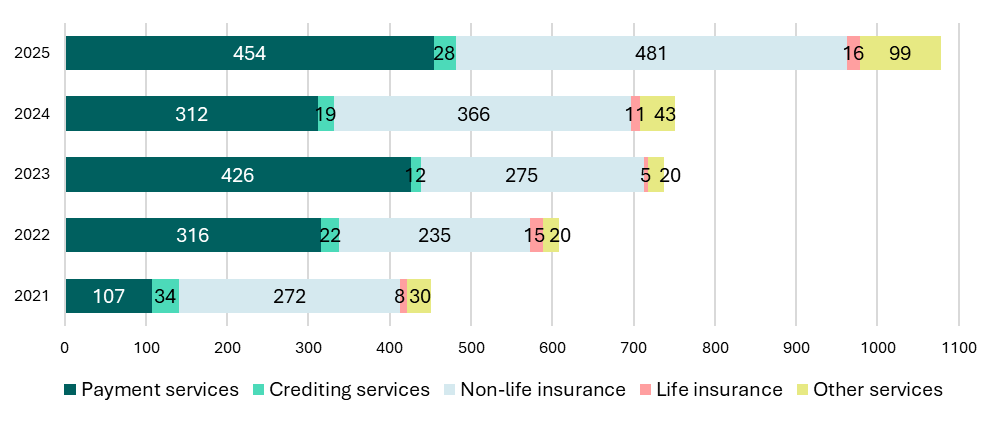
Most of the disputes examined concerned the provision of insurance (46%) and payment services (42%). In the insurance sector, consumers typically most frequently disputed the performance of non-life insurance (139 cases), compulsory third-party liability insurance (134 cases) and Casco insurance (77 cases) contracts. There was also a significant increase in the number of disputes concerning the performance of health (51) and travel (35) insurance contracts. Another 16 cases concerned life insurance contracts. Most disputes regarding payment services were related to financial fraud (275) and non-cash transactions (100). The remaining 12% of cases involved the provision of other services (credit provision, investment services, deposits, crowdfunding, crypto assets, etc.).
Settled disputes over payment services
Units
Source: Lietuvos bankas.
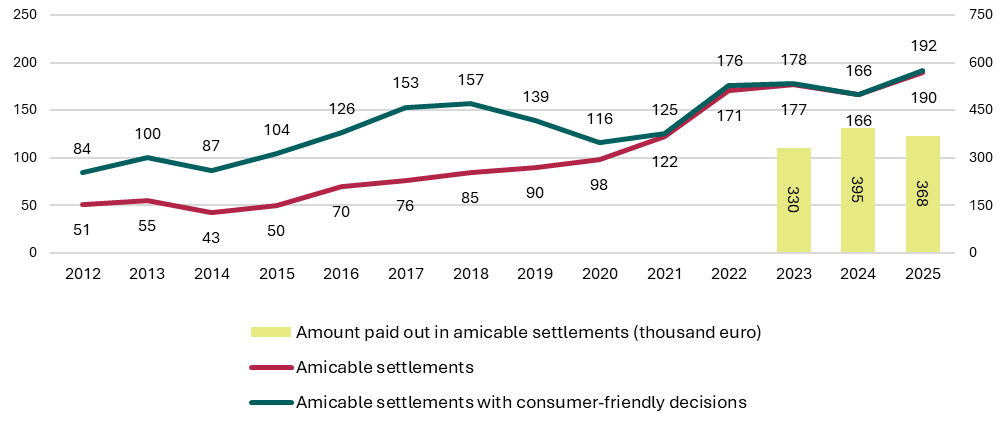
As many as 190 amicable settlements were reached, resulting in payment of more than €368,000 to consumers (nearly €395,000 in 2024) and fulfilling other property and non-property claims. During the reporting period, dispute settlement practices continued to consistently employ conciliation measures between consumers and FMP parties, in order to enable constructive resolution of disputes in a manner acceptable to both parties. Although the total amount paid to consumers based on amicable settlements decreased slightly, as compared to 2024, the results achieved (including a record number of amicable settlements) demonstrate the effectiveness of the chosen strategic direction. Amicable dispute settlement and dispute prevention remain particularly important as the number of applicants continues to grow.
Amicable settlements
Units
Source: Lietuvos bankas.
8.Resolution of financial institutions
In 2025, marking the tenth anniversary of the Single Resolution Mechanism, Lietuvos bankas actively participated in initiatives by the Single Resolution Board and the European Banking Authority aimed at strengthening banks’ preparedness for potential crisis situations, improving crisis management and simplifying resolution planning. In performing its functions as the national resolution authority, Lietuvos bankas updated five resolution plans and prepared one resolution plan for medium- and less significant credit institutions as part of the 2025 resolution planning cycle. The resolution plans for the four largest systemically important banks were updated in collaboration with the Single Resolution Board and the national resolution authorities of other countries where these banks operating in Lithuania are established. Resolution plans prepared during the 2025 planning cycle covered 100% of the assets in the banking sector.
As part of the update to the resolution plans for systemically important banks, a mandatory minimum requirement for own funds and eligible liabilities (MREL) was established to protect public funds in the event of a banking crisis and to contribute to the stability of Lithuania’s financial system. Systemically important banks operating in Lithuania complied with their mandatory MRELs in 2025. A transitional period was set for one systemically important bank to build up MREL resources.
Contributions to the Single Resolution Fund (SRF) are not collected if the accumulated fund exceeds the target level, which is1% of the total amount of covered deposits held by banks in the banking union. As the fund resources exceeded the target level in 2024-2025, no annual contributions were collected. Since the establishment of the SRF, a total of €64.25 million has been transferred to it from credit institutions operating in Lithuania. The funds accumulated in it may be used for the effective implementation of resolution measures. In 2026, contributions to the SRF will not be collected, as the target level does not exceed the size of the accumulated fund.
In January 2025, Directive (EU) 2025/1 of the European Parliament and of the Council entered into force, establishing a framework for the recovery and resolution of insurance and reinsurance undertakings. Lietuvos bankas, in cooperation with the Ministry of Finance, is preparing to transpose the provisions of this Directive into national law. This Directive aims to strengthen the protection of policyholders’ interests, contribute to financial stability and reduce the burden on taxpayers in the event of crises in the insurance sector. The provisions of this Directive must be transposed into national law until 29 January 2027.
In 2025, Lietuvos bankas, in cooperation with the Ministry of Finance, submitted proposals for changes to the crisis management and deposit insurance systems. Amendments to the Bank Recovery and Resolution Directive and the Directive on Deposit Guarantee Schemes are expected to enter into force in the second quarter of 2026. These amendments establish more favourable conditions for the resolution of small and medium-sized banks: taxpayer funds are better protected and smoother protection for depositors is ensured in the event of a banking crisis through protection measures financed by the banking sector. The amendments to the Directive on Deposit Guarantee Schemes harmonise depositor protection standards across the EU and should also ensure better protection for depositors. It is envisaged that deposit guarantee scheme protection will additionally apply to non-profit public entities (hospitals, schools, municipal governments, etc.), customers of EMIs, PIs and investment firms whose funds are deposited by the said institutions in banks.
Member States will have two years to transpose the amendments to the Bank Recovery and Resolution Directive and the Directive on Deposit Guarantee Schemes into national law.
9.Payments
Lietuvos bankas has announced the Lithuanian Payments Market Strategy up to 2030 (hereinafter, the Strategy). The Strategy identifies three priority directions for the development of the Lithuanian payments market: (1) enhancing the security and resilience of services; (2) increasing the accessibility of services; and (3) driving innovation, the achievement of which requires targeted consensus and action by public authorities and market participants. The Strategy sets out seven objectives to ensure that payments remain accessible even under unforeseen circumstances and to minimise risk of fraud. It aims to ensure that all residents, regardless of their place of residence, age or digital skills, can access convenient and secure financial services. It also seeks that European-owned payment solutions based on European standards emerge in the Lithuanian market, thereby increasing the integration of the Lithuanian payments market into the euro payments market and enhancing its competitiveness. The Strategy was prepared after evaluating the outcomes of a public consultation on the Lithuanian payments market strategy up to 2030.
The non-cash payments market in Lithuania continued to grow in 2025. The payment habits of Lithuanian residents and businesses, as well as the use of payment services, are most accurately reflected in domestic transactions, i.e. transactions carried out between customers of Lithuanian PSPs or at card terminals located in Lithuania using cards issued by Lithuanian PSPs. In 2025, compared to 2024, the number of all domestic non-cash payments increased by 17% (14 % in 2024), reaching 1.52 billion transactions, with a total value of €1,480 billion. Card payments accounted for 49%, credit transfers for 43%, e-money payments for 6% and other payment services for 2% of domestic transactions. According to the 2025 survey of Lithuanian residents, card and online payments remain the preferred payment methods, with 74% of respondents indicating that they always or mostly use payment cards or other electronic methods, while 98% report using cash.
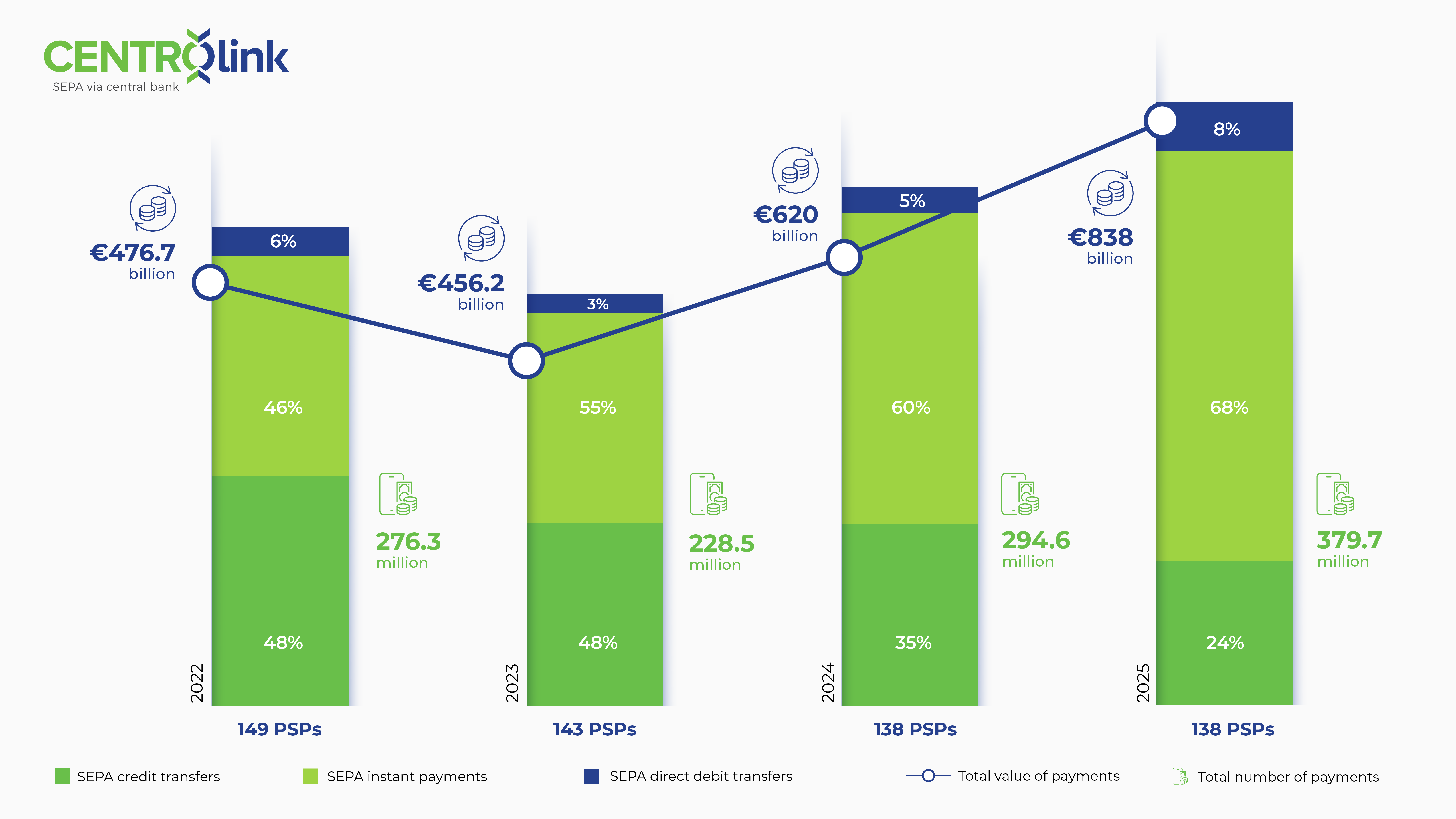
The number of payments executed in the CENTROlink payment system of Lietuvos bankas significantly grew in 2025. A total of 379.7 million SEPA payments were processed in the system (294.6 million in 2024), with a total value of €838 billion. The share of instant payments continued to grow rapidly (68% in 2025, 60% in 2024), while the share of standard credit transfers declined (24% in 2025, 35% in 2024). By the end of 2025, 138 PSPs from twenty countries were using CENTROlink services. The number of PSPs capable of offering instant payment services continued to rise reaching 96 PSPs.
The preparatory phase of the digital euro project was concluded in October 2025, and the subsequent technical preparation phase began in November. The representatives of Lietuvos bankas actively participated in the Eurosystem’ High-Level Digital Euro Task Force and the Project Steering Group provided expert assistance in the legislative process. In 2025, the ECB selected suppliers for the components of the digital euro service platform, including both core internal components, which will be procured from the Eurosystem, and external components, which will be sourced from the market. Work continued on ensuring the resilience of the digital euro as a payment instrument in unforeseen circumstances, including the ability to make payments offline, where payments are made without an internet or mobile connection. According to a consumer survey conducted by the ECB, a majority of respondents (66%) expressed interest in trying out the digital euro, which is broadly in line with the findings from other surveys conducted by the ECB and national central banks. The Governing Council of the ECB will only decide on the issuance of the digital euro once the legal regulation on the digital euro has been adopted. The Eurosystem aims to be ready for a potential issuance of the digital euro in 2029, provided that the regulation on the digital euro is adopted in 2026.
Under the Instant Payments Regulation, as of 9 October 2025, all PSPs offering credit transfer services in euros must provide their customers with a verification of payee service. Before processing a payment, a check is performed to verify whether the name and surname (or name) of the payee to whom the funds are being transferred (hereinafter, the name) matches the actual name of the account holder of the specified payment account. The result of the verification, i.e. whether the specified name matches, almost matches or does not match the actual name, is displayed to the payer. This anti-fraud measure is designed to protect the payer in cases where fraudsters provide an account number with a false name, for example, indicating that it is the account of an acquaintance, an institution or a well-known seller. Lietuvos bankas has developed an infrastructure (the CENTROlink verification of payee service – CENTROlink VoP) for participants in the CENTROlink payment system, which they can use to provide a verification of payee service to their customers.
As a result of negotiations, the Council of the EU and the European Parliament have reached an agreement on improving the EU’s payment services environment, as set out in the updated Payment Services Directive and the Payment Services Regulation. This legislation specifically focuses on fraud prevention. It envisages that PSPs will have to mutually share fraud-related information, monitor payments more closely, also revises the provisions regarding the liability of PSPs and consumers. Other market participants, such as providers of electronic communications services, are also included in the scope of fraud prevention measures. Lietuvos bankas was actively involved in the Council’s negotiations and submitted proposals based on its own experience. Lietuvos bankas will seek to ensure these provisions enter into force in Lithuania as soon as possible. The final adoption and publication of the EU legislation is expected in the summer of 2026.
A comprehensive assessment of the CENTROlink retail payment system was conducted in accordance with the principles for financial market infrastructures), developed by the Committee on Payments and Market Infrastructures of the Bank for International Settlements and the Technical Committee of the International Organisation of Security Commissions (CPMI-IOSCO). Based on the conclusions of the assessment, Lietuvos bankas will further improve the operation of the CENTROlink system, strengthen its security and increase its efficiency.
10.Cash
As of 31 December 2025, the total value of euro banknotes and coins issued into circulation by Lietuvos bankas amounted to €8,999 million.
Euro banknotes and coins
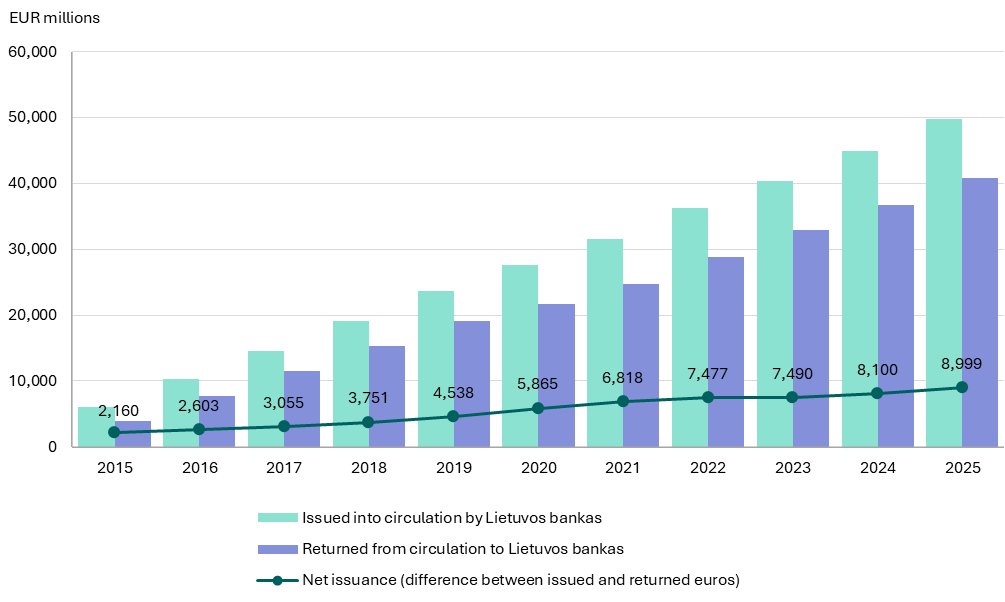
Source: Lietuvos bankas.
As of 1 May 2025, the rounding of cash payment amounts has come into effect in Lithuania. It is established by the Law on Rounding of Cash Payments, initiated by Lietuvos bankas and approved by the Seimas in March 2024. When paying in cash, the final total of the shopping cart is rounded to the nearest 5 euro cents, either up or down, depending on whether the last digit is closer to 0, 5 or 10. Only the final total of the shopping cart is rounded, while the prices of individual goods or services are to be indicated to the nearest cent. Rounding is equally fair to both buyers and sellers. When rounding, a buyer paying in cash pays either 1 or 2 cents less or 1 or 2 cents more than the calculated total amount due, so the differences even out over the long term. In the case of rounding, 1 and 2 cent coins remain legal tender. Over the eight months following the start of rounding, approximately 34 million 1 and 2 cent coins were returned to Lietuvos bankas – typically, fewer than 1 million coins were returned per month. Lietuvos bankas exchanged some of these coins with the Central Bank of Latvia. Coin exchanges between countries are standard practice. In many cases, this is more sustainable and cheaper than minting new coins, and the cash cycle becomes more efficient. Rounding helps reduce the number of small coins in circulation, makes the use of cash easier, ensures smoother transactions, lowers cash-related costs for the public, businesses and the state, and contributes to environmental sustainability. Changes were driven by the fact that the majority of 1 and 2 cent coins are used for payments only once – after receiving change in these denominations, they are either lost or end up in residents’ piggy banks, cars, fountains, and so on. Lietuvos bankas took the initiative after a discussion with the public on the use of 1 and 2 euro cent coins and taking into account the experience of other countries already implementing rounding. According to the latest Eurobarometer survey, nearly 8 out of 10 Lithuanians are in favour of abolishing 1 and 2 euro cent coins in the euro area and the compulsory rounding of the final amount of the shopping cart. Rounding is applied in eight euro area countries: Ireland, Belgium, Italy, the Netherlands, Finland, Slovakia, Estonia and Lithuania. Further information on rounding in Lithuania is available on the website of Lietuvos bankas.
In 2025, access to cash was ensured, and the ATM network which was expanded in 2022 was maintained. According to the majority of residents, access to cash remained nearly unchanged over the past year. In 2022 credit institutions installed 100 new ATMs in Lithuania’s regions as part of the Memorandum of Understanding for Ensuring Access to Cash in Lithuania (hereinafter, the Memorandum), doubling the number of locations where cash can be withdrawn. At the end of 2025, there were 1,140 ATMs in operation across 197 residential areas; 92% of residents could reach the nearest ATM within 10 km, and 99% – within 20 km. In addition to ATMs, people can also use their bank cards to withdraw funds for everyday needs at around 4,000 cash service points of partner credit institutions, such as UAB Perlas Finance terminals, cash desks at retail locations where this service is available, branches and cash desks of some credit unions. Locations for accessing cash (ATMs and alternative points) are listed on the cash accessibility map administered by Lietuvos bankas.
The Lithuanian Payments Market Strategy up to 2030, prepared by Lietuvos bankas, aims to improve access to cash in the regions. Although the importance of cash is declining as alternatives develop and people’s habits change rapidly, it remains an important means of payment for some residents. Lietuvos bankas will seek to improve the conditions for access to cash agreed in the Memorandum, will assess the needs for cash services in the regions together with PSPs, and will seek to meet them. In 2025, Lietuvos bankas met with municipal representatives to discuss the availability of cash, the need for cash deposit services, opportunities for non-cash payments and the extent of the digital divide. Joint solutions are sought together with financial institutions in order to identify measures that could be taken to improve cash availability in the regions.
Changes at Lietuvos bankas cash offices are aimed at smoother, more efficient, and safer service delivery to the public. Lietuvos bankas has implemented a customer identification and registration system at its cash offices, which increases transparency and ensures compliance with AML/CTF requirements, while providing the public with more convenient access to services. In addition, self-service coin exchange machines have been installed, enabling customers to access services more quickly.
Slightly more counterfeit money was detected in Lithuania. In 2025, Lietuvos bankas investigated and removed from circulation 1,621 counterfeit euro (1,030 banknotes and 591 coin). A compared to 2024, 7% less counterfeit euro banknotes and 30% more counterfeit coins were found in Lithuania. Most of the counterfeit euros were 50-euro banknotes and 2-euro coins. In 2025, Lietuvos bankas examined 13,000 banknotes and coins upon receiving applications from natural and legal persons to exchange worn or damaged currency for the total value of €601,000.
The amount of litas brought in by residents to be exchanged is steadily decreasing. In 2025, Lietuvos bankas exchanged into euro LTL 3.1 million, i.e. 13% less than in 2024, bringing the total value of litas in circulation to LTL 395 million as at 31 December 2025.
In 2025, Lietuvos bankas issued into circulation four collector coins, two commemorative coins and a numismatic set of circulation coins. Numismatic items commemorate prominent figures and anniversaries of historical events. They can be purchased on the e-shop of Lietuvos bankas at monetos.lb.lt.
11.Statistics
Under the Official Statistics Programme, Lietuvos bankas implemented the most important tasks as outlined in its statistics work programme for 2025:
·together with other national central banks, the costs of the planned amendments to the Regulation on statistical reporting requirements for insurance corporations were assessed, while ECB users (committees and working groups) evaluated the benefits of these amendments;
·more detailed payment data have been developed to include information on payment fraud involving unauthorised payment transactions and executed payment transactions resulting from payer manipulation. The data are now published on a semi-annual basis;
·the data model for the Loan Risk Database (LRDB) has been uploaded to the ECB’s Single Data Dictionary using the metadata template for national requirements developed by the ECB;
·taking into account the views expressed by representatives of crowdfunding platform operators regarding a disproportionately high reporting burden, a decision was made to reduce the reporting scope for these market participants by removing the obligation to provide detailed data to the LRDB, retaining only the requirements set out in the Regulation on European crowdfunding service providers for business;
·upon the entry into force of the Law on Credit Servicers and Credit Purchasers, credit administrators were included in the list of supervised market participants and were required to submit data to the LRDB. In the light of their comments and stated position, this obligation was formulated in accordance with the principle of proportionality, taking into account the nature of the services they provide and at the same time ensuring that all data relevant to the market are available;
·preparations were made for the implementation of the statistical classification of economic activities in the European Community (NACE) Rev. 2.1: after integrating it into internal systems and statistical reports of Lietuvos bankas, information on the economic activities of enterprises was submitted to the Register of Institutions and Affiliates Data (RIAD);
·preparations were made for the expansion of investment fund statistics in accordance with Regulation (EU) 2024/1988 concerning statistics on investment funds, adopted on 27 June 2024, so that more detailed information (e.g. data on each holder of units, issued by funds, by country, specifying their sector) is collected from January 2026. This statistical information will be further used to compile aggregate investment fund statistics and statistics on individual funds. This will complement other sources of statistical information collected by the ECB, ensuring that the statistical information can be effectively integrated with other sources, including securities holdings statistics, RIAD and the central securities database.
In order to present information in a clearer and more relevant manner and to meet the needs of data users, Lietuvos bankas has created an interactive dashboard of indicators for international trade in services.
Starting in September 2025, Lietuvos bankas began publishing statistical data on payment fraud, aiming to provide consumers with greater access to payment data and enabling international comparisons, as this data have been made available on the ECB’s data portal since July 2025. Read more here.
Lietuvos bankas contributed to the ECB’s preparation of its third set of climate change-related statistical data, which aims to further improve the quality of data for climate change analysis. The current dataset includes experimental green finance indicators, analytical indicators for the carbon footprint of financial institutions’ portfolios and the impact of climate-related physical risks.
At the initiative of Lietuvos bankas, an interinstitutional working group has been established, comprising specialists from Lietuvos bankas, SDA, the State Tax Inspectorate and the Customs Department, to develop a methodology for identifying non-resident traders subject to value-added tax and their transactions. This methodology will refine the data of the balance of payments and national accounts, as well as the GDP estimate for the Republic of Lithuania. Eurostat obliged Lithuania, like all EU Member States, to complete this work by October 2026.
The implementation of projects under the Data Management Maturity Programme continued. The implementation of data platform components has enabled significant improvement in the application of analytical models and increase in the efficiency of decision-making processes within the organisation. A maturity level of 2.74 was achieved according to the CMMI DMM (Data Management Maturity) model. After Lietuvos bankas became a member of the EDM Association, the first assessment was conducted in 2025 using the updated Data Management Capability Assessment Model (DCAM) methodology, which is also applied in other central banks. This methodology allows for a more in-depth assessment of the progress of the data governance programme and provides a clearer roadmap for future capability improvements.
12.Fiscal agent
Acting as the fiscal agent under the Republic of Lithuania Law on the Bank of Lithuania, in 2025, Lietuvos bankas administered accounts of public entities and carried out financial operations for public entities under the procedure and conditions laid down by Lietuvos bankas. Lietuvos bankas provided banking services to the following public entities: the Ministry of Finance by administering the accounts of the State Treasury of the Republic of Lithuania, national promotional institutions and other public sector institutions managing statutory funds, as well as EU institutions, and foreign central banks within the Eurosystem Reserve Management Services framework.
Lietuvos bankas offers the following banking services to public entities: transfers funds in accordance with payment instructions, credits accounts, exchanges currencies, and compiles and provides statements of accounts and other information. In the course of 2025, Lietuvos bankas executed 3,921,700 credit transfers under the payment instructions of public entities; their total value amounted to €38.0 billion.
As part of the project to implement the Unified Treasury Account Information System (VIKSVA), designed to centralise the holding and management of state funds and thereby manage state financial resources more rationally and effectively, with 403 budgetary institutions and funds having joined VIKSVA, the Ministry of Finance continued to actively use the services of the CENTROlink payment system administered by Lietuvos bankas (including the instant payment service), submitting, on average, approximately 320,000 payment orders per month.
Payments by public entities
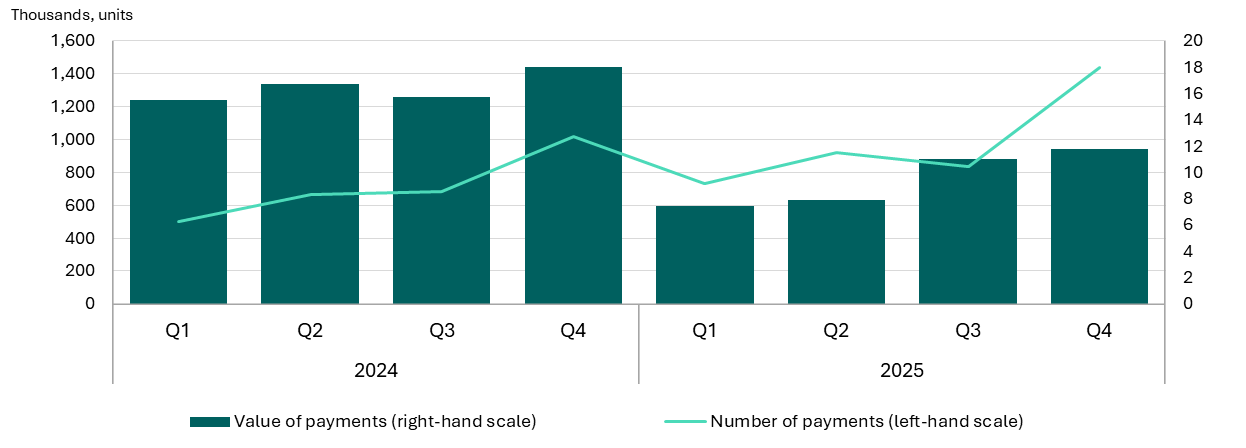
Source: Lietuvos bankas.
13.Organisation of activities
Annual employee turnover
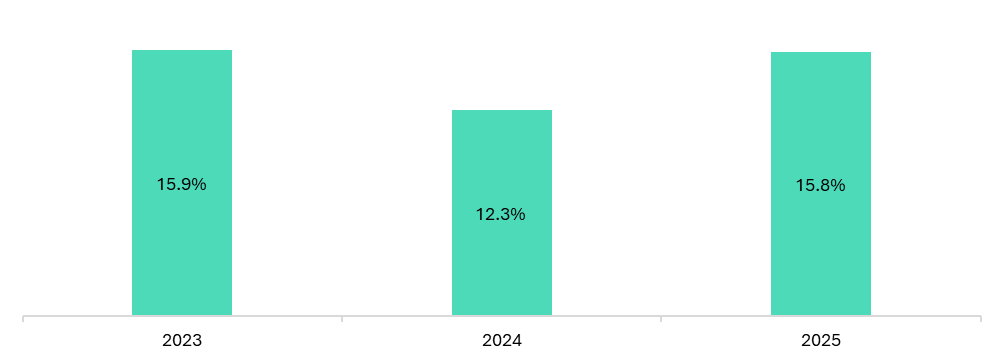
Source: Lietuvos bankas.
In 2025, structural changes were implemented in the IT Department, Market Operations Department, Strategy and Governance Department and Corporate Services Department. New divisions were set up within the IT Department, including User Technologies and Services Division (intended to ensure the quality of IT services and improve user experience); Digitalisation Division (intended to strengthen digital transformation and ensure that IT operations are focused on the value created by Lietuvos bankas and the development of organisational architecture); the Data Engineering Division, Application Management Division, Applications Engineering Division and IT Infrastructure Division were set up to implement the data-driven vision of Lietuvos bankas, manage third-party solutions, develop automation and ensure a secure foundation for cloud and hybrid architecture. The Market Operations Automation Division was removed from the Market Operations Department, while its system implementation and support functions were consolidated within the Applications Engineering Division of the IT Department. A new Procurement Management Division has been established within the Corporate Services Department, focused on strategic procurement management and the more efficient organisation and implementation of the procurement process; a new Administration and Organisation Division consolidates the administrative and general services functions that were previously spread across three divisions. The implemented structural changes allow to move more decisively toward digital transformation and process automation and to improve the experience of internal and external customers.
In 2025, the role of the People and Culture Division, as a strategic partner, was strengthened by purposefully reorganising the Division’s operations and transitioning to a model based on partnerships with business units. This change enabled a more consistent contribution to shaping organisational culture, increasing employee engagement and implementing initiatives for employee development, mobility and career planning.
The year was significant in terms of fostering culture at Lietuvos bankas. To ensure alignment with the strategy and objectives of Lietuvos bankas, the values and value-based behaviours of Lietuvos bankas were reviewed and updated after four years. The list of values was expanded to include the teamwork aspect: a total of four values identified and described in detail – we create meaningfully, we act responsibly, we change boldly and we succeed together.
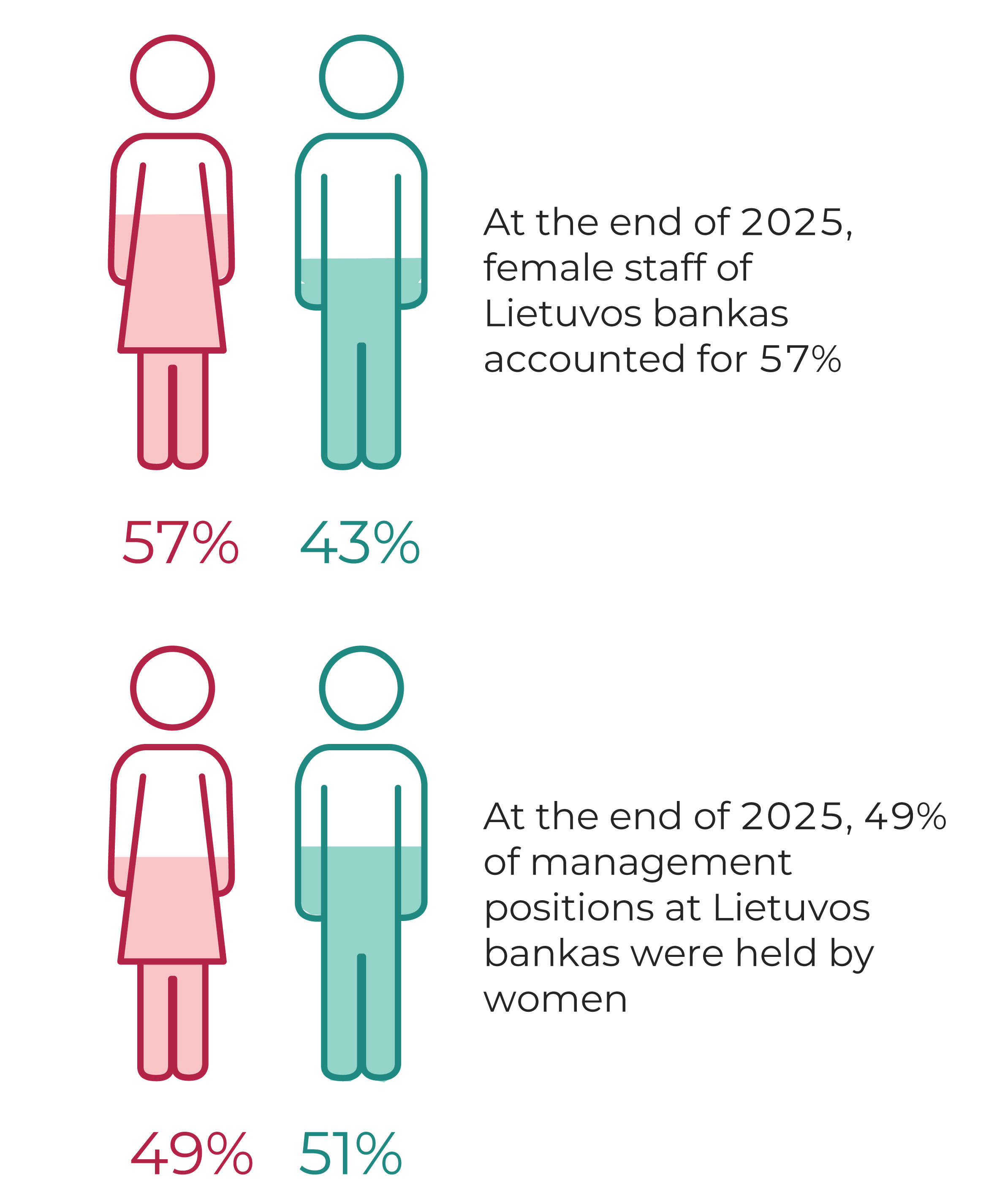
Strategic competency development programmes were implemented in 2025. The “Leadership Mission” programme is designed to strengthen the strategic role and leadership skills of middle managers, as well as to improve mutual understanding and communication with senior management. Under the potential development programme, leadership and effectiveness competencies were developed, and projects important to the organisation were implemented. Significant attention was also paid to digital competencies: as part of the #SkaITmenizuojamės programme, employees learned to use artificial intelligence and everyday software more effectively and securely. Additionally, in 2025, digital training programmes were launched – interactive e-learning courses were developed and rolled out on topics relevant to both newcomers and all employees, including data protection, ethics, information security and the prevention of violence and harassment. Nearly a quarter of the Bank’s employees also improved their customer service skills to ensure the development of partnership-based relationships with stakeholders.
For the seventh consecutive year, the staff of Lietuvos bankas had an opportunity to participate in the ECB-coordinated Schumann inter-institutional staff exchange programme, which is open to all staff of the ESCB and SSM institutions. The objective of the programme is enable the staff of EU central banks and supervisory authorities to gain hands-on experience in specific projects in other organisations, while contributing to the promotion of a common culture of mobility and interinstitutional cooperation within the ESCB, and to the implementation of the SSM. In 2025, three employees of Lietuvos bankas joined their colleagues at the central banks of Malta, Portugal and Germany. Lietuvos bankas also participates in the programme as a host institution, announcing projects and providing opportunities for employees of other ESCB and SSM institutions to participate in interinstitutional exchanges. The implementation of these projects is planned for 2026.
In addition to interinstitutional exchanges, Lietuvos bankas also implemented internal staff rotations. These are among the career planning tools designed to develop highly qualified specialists and managers, providing opportunities to gain new professional experience and strengthen leadership and other general skills. Employee participation in rotations is viewed as an advantage for pursuing both horizontal and vertical career advancement within the institution.
In 2025, Lietuvos bankas participated in a number of programmes encouraging Lithuanians to return to Lithuania. Lietuvos bankas cooperated with the consulting centre Grįžtu.LT under the auspices of the Ministry of Foreign Affairs and contributed to the activities of Global Lithuania by publishing on the websites of these organisations information about job and internship opportunities, prizes and scholarships, and took part in the LISS (Lithuanian International Student Services) project organised by the Lithuanian American community, during which students from the Lithuanian diaspora in the United States and Canada returned to Lithuania for a few-week internship. Two students had the opportunity to do an internship at Lietuvos bankas.
In 2025, the three best students (based on academic achievement and motivation) of the Quantitative Economics study programme at Vilnius University were awarded the Vladas Terleckas scholarship by Lietuvos bankas. The aim of this scholarship is to raise the profile of Lietuvos bankas as a centre of excellence, to encourage the most talented Lithuanian pupils to choose Quantitative Economics at Vilnius University and to train analysts meeting the standards of the best universities, who will contribute to a qualitative change in the Lithuania’s economy, finance, data analysis and forecasting.
In response to the challenges for the quality of doctoral studies in economics in Lithuania and their international competitiveness, in the spring of 2025, Lietuvos bankas, together with Vilnius University, entered a new phase of cooperation aimed at the strengthening of doctoral studies. One of the steps toward strengthening doctoral studies is the development and delivery of a new generation of doctoral courses that meet the standards of doctoral programs at Western universities. A total of five such courses have been developed (research methods, statistics and mathematics for economists, microeconomics and macroeconomics for advanced students and applied econometrics).
14.Research activities
Research at Lietuvos bankas is primarily conducted at the Centre for Excellence in Finance and Economic Research (CEFER) and the Applied Macroeconomic Research Division (TMTS). In cooperation with Vilnius University and Kaunas University of Technology, CEFER aims to attract internationally acclaimed researchers, thus raising the quality of economic and financial research and the academic culture, stimulating expert discussions and ultimately positioning itself as the hub of economic and financial sciences in the Baltic region. TMTS research helps in making monetary and other economic policy decisions, and the models it develops help to improve the accuracy of projections for the Lithuanian economy, analyse economic policy scenarios and make informed economic decisions.
Lietuvos bankas researchers published their research papers in high-profile international journals. In 2025, the research output of Lietuvos bankas researchers included a total of 16 working, occasional and discussion papers as well as 8 peer-reviewed publications in high-level international academic journals (such as The Economic Journal, Journal of Monetary Economics, Labour Economics, etc.).
Lietuvos bankas contributed to the organisation of high-level events for economic researchers in Lithuania. In May 2025, the elite of labour market researchers – the world’s leading researchers in the field of search and matching – gathered in Vilnius. The keynote speaker at this conference, jointly organised by Lietuvos bankas and Vilnius University, was Robert Shimer, Distinguished Professor Emeritus at the University of Chicago. In June 2025, Lietuvos bankas, together with ISM University of Management and Economics, held the 7th annual research conference of the Baltic Economic Association. 50 researchers from universities around the world and central banks in Europe and the USA gave speeches at conference sessions, including “Corporate Finance”, “Trade Sanctions and Restrictions”, “Macroeconomic Policy Modelling”, “Household Decisions”, “International Finance”, “Climate”, “Inequality”, “Financial Markets”, “Public Debt”, “Credit Structure”, “Political Conflicts”, “Supply Chains”, “International Trade”, “Mobility and Migration”, “Financial Constraints” and “Housing”. The conference’s keynote speaker, Professor Luigi Guiso of the Einaudi Institute of Economics and Finance in Rome, presented a study titled “The Economic Cost of Ambiguous Laws”. In September 2025, the Economic Conference of Lietuvos bankas “Productivity, Convergence and Competitiveness in Europe” was organised in collaboration with the International Competitiveness Network (CompNet). At the conference, keynote speaker Chad Syverson, a professor of economics at the University of Chicago, along with international policymakers, foreign and Lithuanian academics and experts, presented research and discussed the challenges and opportunities for small open economies in an uncertain world. The 14th Annual Lithuanian Conference on Economic Research, held in December 2025, was another joint event organised by Lietuvos bankas and Vilnius University. At the conference, researchers from the Lithuanian diaspora at the ECB, the National University of Singapore, the Federal Reserve of the United States, the Norwegian Central Bank, the University of Zurich, the London School of Economics, BI Norwegian Business School and the University of Hong Kong delivered presentations on topics in financial market stability and risks, public policy, digital challenges and macroeconomic forecasting fields.
Researchers at Lietuvos bankas actively contribute to strengthening advanced economic studies in Lithuania that meet international standards. In cooperation with Vilnius University, Lietuvos bankas further implemented the bachelor’s programme in Quantitative Economics. In 2025, the programme attracted the highest number of applicants ever, despite its highest enrolment bar among all Lithuanian university programmes. It is taught by Lietuvos bankas researchers with PhDs from leading US and European universities. The programme is unique in its structure as it combines the economic intuition with disciplines, such as mathematics, statistics, economics and data science, based on the latest research and teaching methods.
CEFER has also strengthened its cooperation with Vilnius University in the field of doctoral studies in economics. In the spring of 2025, a new cooperation agreement was signed with Vilnius University in the field of doctoral studies in economics. Under this agreement, researchers from Lietuvos bankas not only engaged in the development of a new high-quality doctoral programme and taught courses, but also advise and mentor doctoral students, propose relevant doctoral research topics and take part in scientific collaboration with the most active and advanced doctoral students in the field of economics.
The Bank’s researchers have also been involved in various other activities aimed at improving the dissemination and quality of economic and financial science in Lithuania. In the spring of 2025, the fourth team economics competition “CEFER Challenge” took place, inviting bachelor and master students to apply their knowledge gained during their studies in a practical context by assessing the macroeconomic consequences of artificial intelligence (AI) on economic growth in the euro area, the labour market, labour productivity growth, inflation and the financial services sector. A team from the Vienna University of Economics and Business won the challenge with the topic “Assessment of the Impact of AI Stocks on Pension Funds in the Euro Area”. The “CEFER Challenge” was organised in collaboration with the Ministry of Economy and Innovation, AB Nasdaq Vilnius and the public institution “Invest in Lithuania.” At the end of 2025, CEFER organised an annual research workshop for young researchers from Vilnius University and Kaunas University of Technology, with the contribution on the part of the Bank’s researchers to the scientific committee and active participation in the workshop. As every year, the quality and dissemination of economic research is also ensured through visits and presentations by foreign researchers and training sessions, all of which are open to all interested parties, including external researchers and experts.
International micro-level data and research initiatives continue at the initiative of Lietuvos bankas. Lithuanian micro-level administrative data (on social insurance fund beneficiaries, foreign trade and corporate finances) are extensively used to analyse the state of the Lithuanian labour market, its changes and competitiveness. These studies help to better understand the Lithuanian economy, its context and trends, as well as the impact of economic reforms, and support the implementation of evidence-based economic policy.
Researchers at Lietuvos bankas apply their expertise in preparing the Bank’s position and insights. One such example is the occasional paper “Preliminary Assessment of the Proposed Reform of the Lithuanian Second Pillar Pension System”. Like other works, it contributes to objective economic policy discussions and an unbiased assessment of the impact of economic policy decisions.
15.Other important events during the reporting period
Technical cooperation is a key area of Lietuvos bankas’ activities. On 15 September 2025, Lietuvos bankas, together with 19 ESCB national central banks and the ECB, officially completed the implementation of the three-year EU-funded “Programme for Strengthening the Central Bank Capacities in the Western Balkans with a view to the Integration to the European System of Central Banks. Phase II”. The project is intended to strengthen the institutional capacity of central banks and banking supervisory agencies in six Western Balkan countries, by improving their analytical and policy tools and by transposing best international and European standards into national practices. The EC has allocated €3 million to the programme under the Instrument for Pre-Accession Assistance (IPA III).
A two-year, €2 million EU-funded project for African countries, “Strengthening financial stability, resilience and governance – Towards an enhanced European System of Central Banks (ESCB) dialogue with Africa”, launched in 2023, was extended for another two years in December 2025 with an additional budget of €2 million. The project seeks to strengthen the capacity of central banks in African countries and address major challenges in good governance, financial stability, resilience, strategic planning, and international cooperation through dialogue and sharing of expertise. The project will benefit 12 African central banks covering a total of 24 African countries. Lietuvos bankas is implementing the project in collaboration with seven ESCB national central banks and the ECB.
Since 1 January 2025, Lietuvos bankas, together with the Polish and Spanish supervisory authorities, has been successfully implementing the EU Twinning project “Implementing Effective Supervision over Non-Bank Financial Institutions” at the National Bank of Ukraine. The project component aimed at introducing quantitative risk assessment is led and implemented by Lietuvos bankas in cooperation with the Spanish supervisory authority. The project is worth €1.5 million and will last for 24 months.
The annual Economic Conference of Lietuvos bankas, held on 25-26 September 2025, in collaboration with the Competitiveness Research Network (CompNet), focused on productivity, convergence and competitiveness in Europe. In recent years, amid shifting global trade trends, economic policies and growing geopolitical uncertainty, the role of small and open European economies has become increasingly significant. Conference participants discussed the today’s challenges for small and open economies in a rapidly changing global environment, as well as opportunities to overcome them, and debated on the drivers of long-term growth, the dynamics of European competitiveness and the strategic role of small economies in strengthening economic resilience to future challenges.
On 29 September 2025, Lietuvos bankas, together with the central banks of Estonia and Latvia, organised the Baltic Digital Euro Conference “Payments & Policy in a Changing Environment” in Tallinn. The conference aimed at raising awareness of the digital euro as a public good and its role in a secure system, while strengthening the resilience of European payment systems in a period of geopolitical and technological uncertainty. The conference analysed the reasons for creating the digital euro and its strategic importance. Keynote speeches at the conference were delivered by Valdis Dombrovskis, European Commissioner for Economy and Productivity, and Piero Cipollone, Member of the Executive Board of the ECB.
On 20 November 2025, Lietuvos bankas held its 13th annual real estate conference. Discussions focused on the dynamics of housing market transactions and credit, trends in housing supply, supply-oriented housing policy, renovation challenges and preparedness to meet future housing needs.
In August 2025, Lietuvos bankas launched the informational campaign “Decide for Yourself #withcharacter” (“Spręsk pats #sucharakteriu”), encouraging residents to strengthen their ability to manage personal finances and make decisions based on knowledge rather than emotions. By managing their personal finances with awareness, residents can reduce housing loan costs, optimise monthly payments and protect their funds from financial threats.
In December 2025, Lietuvos bankas, together with the LRT national broadcaster, the Lithuanian Police and the Association of Lithuanian Banks, launched a public awareness campaign against scammers titled “Hang Up” (“Padėk ragelį”). The campaign aims at helping residents recognise the most common scams, stop scammers’ pressure in time and protect their money and personal data.
On its website, Lietuvos bankas publishes comparative information relevant residents, such as payment service fees, unit-linked insurance deduction calculator, interest rates on time deposits, savings and irrevocable deposits offered by commercial banks and credit unions, and a calculator for housing loans.
In response to the challenges for the quality of doctoral studies in economics in Lithuania and their international competitiveness, Lietuvos bankas, together with Vilnius University, entered a new phase of cooperation. The long-standing partnership, which began with the creation of a joint bachelor’s programme in Quantitative Economics and collaboration between Lietuvos bankas’ CEFER and the Faculty of Economics and Business Administration at Vilnius University, now also includes the strengthening of doctoral studies. The updated study modules are now available not only to doctoral students at Vilnius University, but also to those at other Lithuanian higher education institutions.
To showcase to the public the contribution of Lietuvos bankas to the promotion of culture and the arts, an opportunity has been provided to view the most valuable works from Lietuvos bankas’ art collection. From February to May 2025, the exhibition “Revelations: From the Art Collection of Lietuvos bankas” was on display at the National Museum – Palace of the Grand Dukes of Lithuania, and from July to October at the Klaipėda Castle Museum. Works from Lietuvos bankas’ art collection are traditionally used to decorate the Bank’s interiors and create an aesthetic environment.
In February 2025, the Capital Market Council was recognised at the Nasdaq Baltic Market Awards for its achievements in developing the capital market in Lithuania. It received the “Breakthrough of the Year” award for its leadership in advancing the Lithuanian capital market.
Annual financial statements of Lietuvos bankas
Annual financial statements of Lietuvos bankas are available here.
Annexes
Collector and commemorative coins issued into circulation in 2025
The list of collector and commemorative coins put into circulation is available here.
Resolutions adopted by the Board of Lietuvos bankas and made publicly available on the Register of Legal Acts in 2025
In 2025, Lietuvos bankas took active legislative actions by adopting its regulatory legislation. It is published in the Register of Legal Acts.
Abbreviations
AB Public limited liability company
CCB countercyclical capital buffer
RLR Responsible Lending Regulations
SSM Single Supervisory Mechanism
GDP Gross domestic product
FBF Financial brokerage firms
ECB European Central Bank
ESCB European System of Central Banks
EC European Commission
EMI Electronic money institutions
EU European Union
Eurosystem European Central Bank and central banks in the Euro area
FMP Financial market participants
CIUFII collective investment undertakings intended for informed investors
LCIUFII Law on Collective Investment Undertakings for Informed Investors.
ICT Information and Communication Technologies
IT Information technology
USA United States of America
UK United Kingdom
CIU Collective investment undertakings
CMC Capital Market Council
PI payment institutions
PSP Payment service providers
RE Real estate
PF Pension funds
MFI Monetary financial institutions
AML/CTF Prevention of money laundering and terrorist financing
DS Debt securities
HICP Harmonised Index of Consumer Prices
IMF International Monetary Fund
S Securities
SDA State Data Agency
MC Management companiess
CCP Consumer credit providers
GS Government securities
|
© Lietuvos bankas Gedimino pr. 6, LT-01103 Vilnius The Board of Lietuvos bankas approved the 2025 Report on 9 April 2026. Totals/percentages in some tables and charts may not add up due to rounding ('Total' and 100%). Reproduction for educational and non-commercial purposes is permitted provided that the source is acknowledged. ISSN 1648-9039 (online) |