


Denomination:
€2
Composition: alloy
Diameter: 25.75 mm
Weight: 8.50 g
Coin type: commemorative
Designed by Tomas Dragūnas (national side) and Luc Luycx (common side)
On the edge of the coin: LAISVĖ * VIENYBĖ * GEROVĖ * (FREEDOM * UNITY * WELL-BEING *)
Pre-order from 24/09/2026
Release date: 01/10/2026
Mintage: The estimated mintage is 500,000 pcs, including 5,000 BU-quality coins in a numismatic package and 495,000 UNC- quality coins in rolls.
Price: BU quality – EUR 12.00 (inclusive of VAT), unc quality – exchanged according to denomination
Minted at the Lithuanian Mint
Coin description
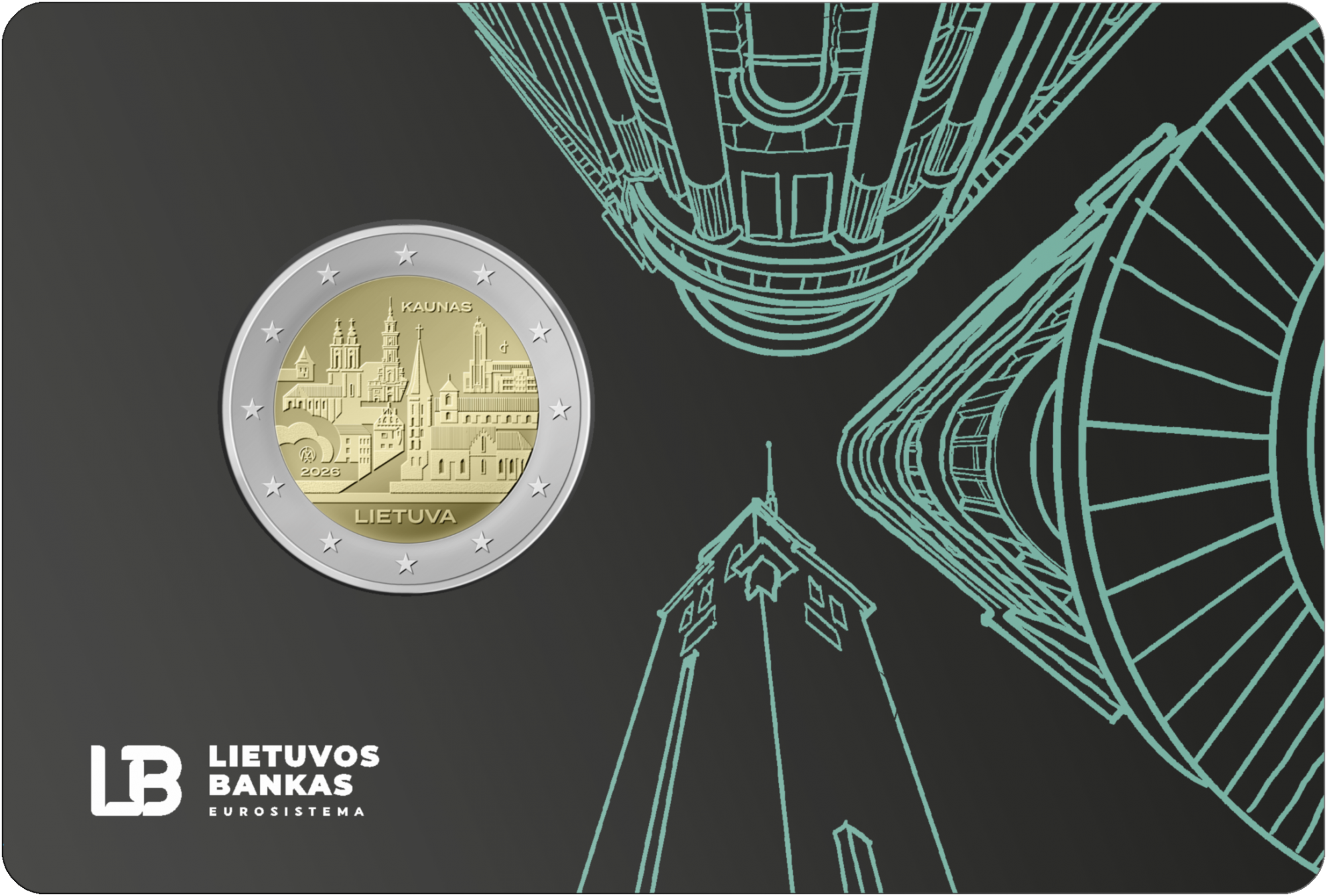
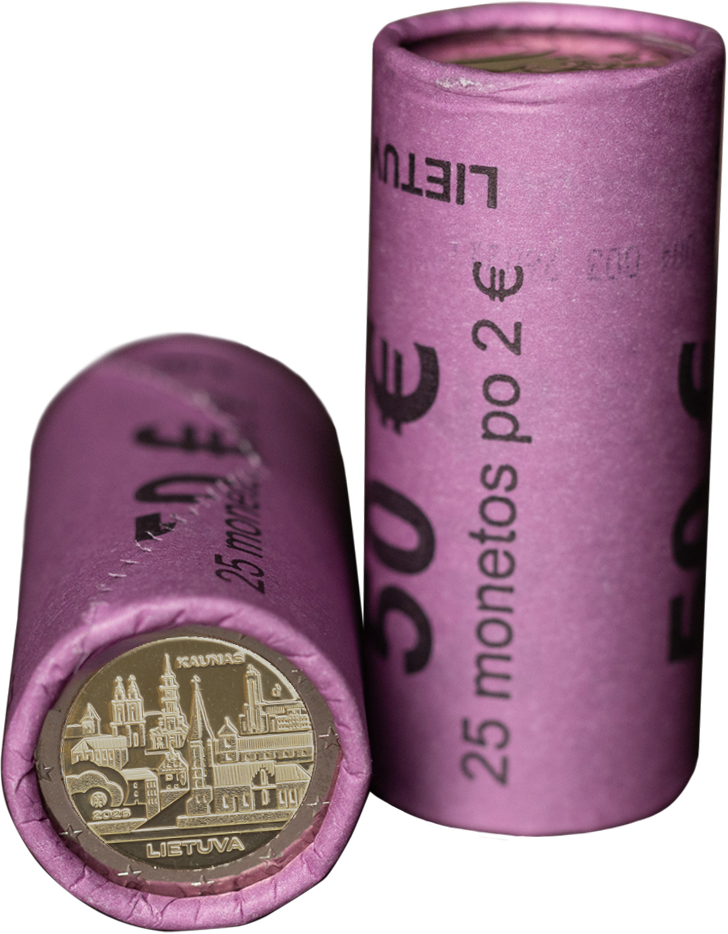
Kaunas is a city whose history vividly reflects the development of the Lithuanian state. Situated at the confluence of the Nemunas and Neris rivers, it evolved over the centuries into an important centre of trade, crafts and culture. Kaunas gained particular significance between 1919 and 1939, when, as the temporary capital of Lithuania, it became the heart of the country’s political, economic and cultural life.
The city’s architecture reflects the legacy of different historical periods. Its Old Town retains features of Gothic architecture and later styles, including Kaunas Castle, Vytautas the Great Church, the House of Perkūnas, the Town Hall and other notable buildings. During the interwar period, the city underwent rapid growth and modernisation, giving rise to the distinctive architectural character of Modernist Kaunas. The architecture and urban development of this period gained international recognition in 2023, when Modernist Kaunas was inscribed on the UNESCO World Heritage List.
Kaunas brings together several important layers of Lithuanian history – from the historic city at the confluence of two rivers and the modernising interwar capital to vibrant present-day Kaunas. While preserving its rich historical and architectural heritage, Kaunas continues to evolve and grow, remaining one of Lithuania’s leading centres of culture, science and economic activity.
Last update: 23-09-2026