
2014-03-06
The Bank of Lithuania is training retailers to recognise euros, identify fake money

This spring the Bank of Lithuania will train about 600 cash handlers at distribution businesses and postal companies to recognise our future currency’s euro banknotes and coins. They will disseminate this gained knowledge on the European Union’s (EU) currency to their colleagues throughout the country. The first training seminar for cashiers at distribution businesses took place in Vilnius.

Photo by Dainius Labutis (ELTA)
“To ensure that the introduction of the new currency at the beginning of next year takes place smoothly and understanding the important role that you, cashiers at distribution businesses, play in the cash trading scheme, we invited you to seminars on the security features of the euro. Specialists from the Bank of Lithuania will introduce you to the new currency’s design and security features much earlier than the new currency will appear in our wallets, therefore, we hope that this will help us consistently and thoroughly prepare for the changeover”, said Vitas Vasiliauskas, Chairman of the Board of the Bank of Lithuania, in speaking to the participants of the seminar.
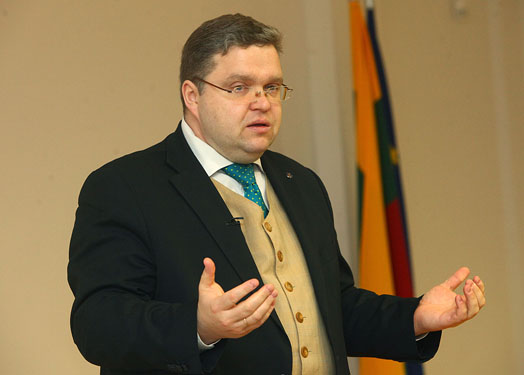
Vitas Vasiliauskas, Chairman of the Board of the Bank of Lithuania (photo by Dainius Labutis, ELTA)
According to him the changeover could be taken advantage of by counterfeiters, who would try to palm off fake EU currency to other people and retailers could become an important link in a reliable firewall against potential euro counterfeiters. The Lithuanian population also will be informed in detail on the euro security features.
This spring and in the fall almost fifty seminars will be prepared. The Bank of Lithuania’s experts will present the main euro banknote security features, introduce the euro coins and explain how to recognise counterfeit euro. Also, general information on the changeover process will be provided.
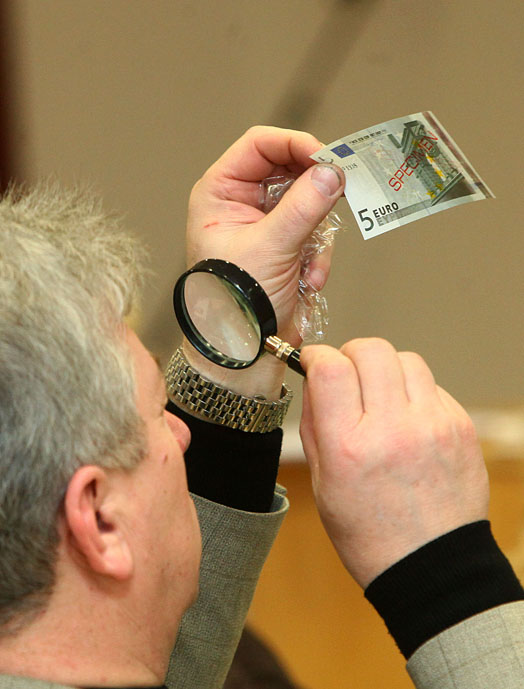
Photo by Dainius Labutis (ELTA)
Frontloading of euro banknotes and coins to large distribution businesses will take place through commercial banks and will begin 1 month prior to the euro adoption. It is envisaged that under the simplified procedure banks will provide small distribution and service businesses with euro 5 calendar days prior to the introduction of the euro.
Lithuania hopes to successfully meet the requirements for the euro adoption, called the Maastricht criteria, and on 1 January 2015 adopt the EU single currency.
More photos
