
2014-03-11
Survey: Almost 70 per cent of the population feel positive about the Vytis on Lithuanian euro coins, one-fourth do not have an opinion

69 per cent of the respondents felt positive about the fact that the national side of Lithuanian euro coins would feature the national symbol, Vytis. 7 per cent assessed the fact negatively; one-fourth did not have an opinion on this issue. Such results were revealed in a representative survey of Lithuanian residents, conducted by UAB Spinter tyrimai early this year on behalf of the Bank of Lithuania.
The respondents were also asked to specify the reasons for their evaluation. Most of those who felt positive about the Vytis on Lithuanian euro coins claimed that, for them, Vytis was “Lithuanian, familiar and personal”; 9 per cent of those surveyed mentioned that the national symbol would reflect our country, Lithuanian and national identity. The facts that Vytis is the coat of arms of our state and that the Lithuanian euro will be reminiscent of the litas were specified by 8 per cent and 7 per cent, respectively, of those surveyed.
Among the reasons for negative assessment were the following: “why do we need it”, “the euro should be the same throughout the European Union”, “the euro isn’t the Lithuanian currency, so it doesn’t need Lithuanian symbols”. There were also individual proposals to feature Vincas Kudirka or Jonas Basanavičius on the coins instead.
Every state which has adopted the euro enjoys the right of issuing circulation euro coins, one side of which is common for all states (common side) and the other is distinctive, different (national side). Euro banknotes are uniform across the European Union.
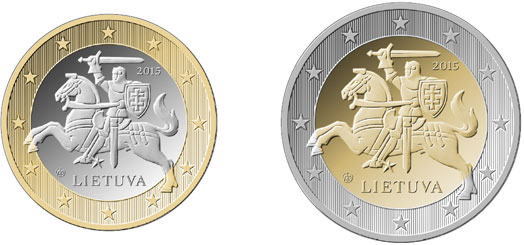
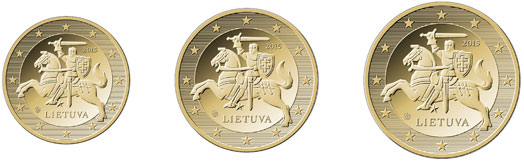
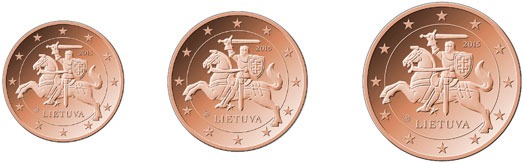
The circulation euro coins issued by Lithuania will bear three images with the symbol of the State of Lithuania's coat-of-arms, the Vytis, which have been created by sculptor Antanas Žukauskas. The first technological specimens of euros with the Lithuanian side of the 2015 issue are to be minted by UAB Lithuanian Mint already this spring.
Lithuania expects to successfully meet the established requirements for euro adoption, the so-called Maastricht criteria, and on 1 January 2015 to adopt the single currency of the EU.