
2015-12-15
Economic growth to be stronger next year, but forecast more restrained than previous

In 2016, growth of the domestic economy will be stronger due to export growth; the forecast for GDP growth is nonetheless reduced, this stemming from more cautious assessment of the outlook for the international environment.
‘While rising wages-driven consumption and growing investment allow us to be optimistic, the ongoing downturn in Russia’s economy and the fragile international economic environment make us project more cautiously the growth of our economy as well,’ says Raimondas Kuodis, Deputy Chair of the Board of the Bank of Lithuania.
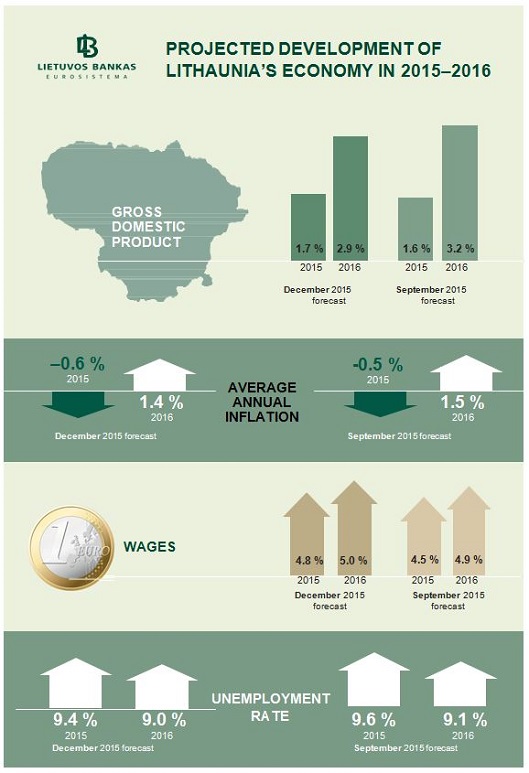
The 1.7 per cent growth of the Lithuanian economy for this year is expected to accelerate to 2.9 per cent next year. The latest forecast is 0.3 p.p. below than that published in autumn. The reduction of the indicator was driven mainly by the prevailing uncertainty surrounding the prospects for economic development in trade partner countries, especially Russia and countries related to it through financial and economic ties. Nevertheless, enterprises managed to offset a fairly large share of the decline in exports to Eastern countries with rising exports to other countries, particularly the EU. The USA, some Asian and Middle Eastern countries have become more significant trade partners for Lithuania as well.
However, the domestic demand-related factors — strong growth in private consumption and investment — remain the key factors driving economic development. Although general construction growth has decelerated, it is still heavily invested in residential buildings. These investments have already reached the levels that prevailed before the economic recession. As more job vacancies occur, unemployment declines and minimum monthly wages rise, labour remuneration is likely to increase 5 per cent next year. Consumer-friendly price trends are likely to promote consumption.
‘In recent years, price downturn was mainly due to the fall in global energy raw materials; however, when this contribution disappears, annual inflation is likely to become positive as soon as next year. A low inflation environment is nonetheless likely to prevail; consequently, with the rise in average wages outpacing price increases, the purchasing power of households will increase,’ says Gediminas Šimkus, Director of the Economics and Financial Stability Service of the Bank of Lithuania.
According to the estimates of Bank of Lithuania economists, average annual inflation will be 1.4 per cent in 2016 (the previous projection was 1.5%). It is projected that energy prices may fall further, albeit at a much slower pace than this year, while the rises in the prices of other groups of goods and services will not be strong.
On the Bank of Lithuania’s website you can get acquainted with the latest medium-term macroeconomic forecasts and the Lithuanian Economic Review (1.3 MB download icon).