2017-07-03

According to the Bank of Lithuania survey, domestic banks indicate leaving their lending policy basically unchanged, expecting no robust real estate (RE) prices growth this year.
‘Even though corporates view borrowing conditions as more favourable, banks do not loosen the lending screws. Nonetheless, our analysis of statistical data shows that economic and wage upswing is accompanied by moderate growth in banks’ risk appetite. As the housing market and lending are on the verge of heating up, it is crucial that market participants manage risk responsibly’, said Simonas Krėpšta, Director of the Financial Stability Department at the Bank of Lithuania.
In Q1 2017, eight banks out of ten left their credit terms and conditions unchanged, whereas two banks slightly tightened their credit standards for small enterprises. Banks indicate that in the near future, credit standards to enterprises will tighten only marginally, terms and conditions of housing loans will remain unchanged, while those of consumer credits will see slight easing.
According to banks, demand for consumer credit followed a moderated downward trend in Q1 2017, while that for housing and business loans remained unchanged. Housing loan demand was boosted by resident expectations for housing supply and price dynamics as well as a low level of interest rates. Corporate borrowing was fuelled by an increased need to finance working capital and build up capital buffers. Banks believe that in the nearest future consumer credit and business loan demand will boost, while housing loan demand will somewhat moderate.
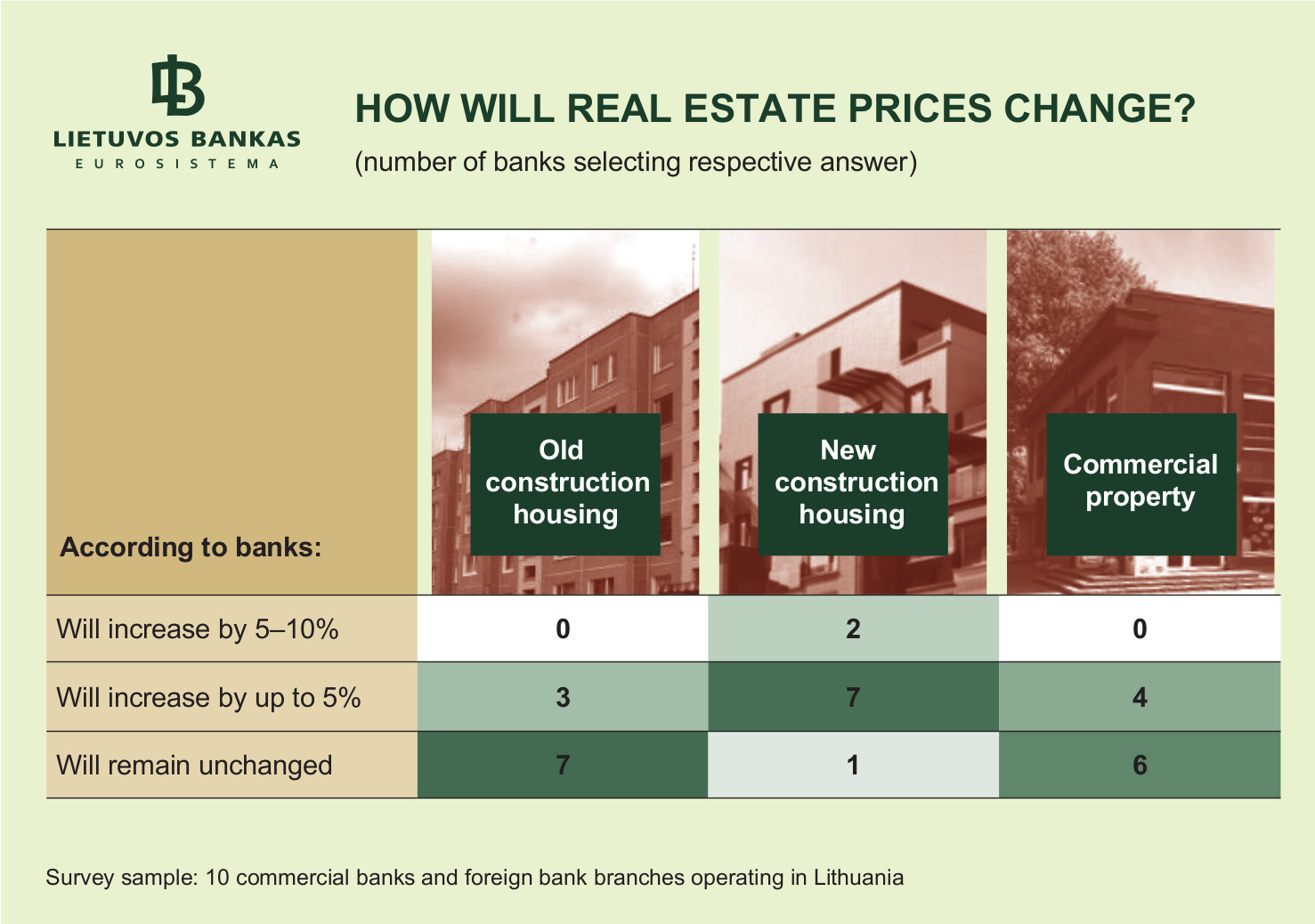
Even though RE prices in Lithuania have been on a rise for the entirety of last year and Q1 2017, the surveyed banks do not expect robust future growth. Seven out of ten banks believe that in the upcoming year newly-built apartment prices will rise by less than 5 per cent, while prices of old construction apartments will remain unchanged. Eight out of ten banks indicated that currently there are no imbalances in the housing market, yet one respondent saw some signs of their formation in the commercial RE market.