
2014-12-18
1,200 cashiers, who learnt to recognise euros and identify counterfeit currency during the Bank of Lithuania’s training, conveyed their knowledge to ten times more of their colleagues

During the training organised by the Bank of Lithuania, 1,200 cash handlers from financial services, trade and postal companies have been taught to recognise our future currency’s euro banknotes and coins. They have been disseminating this gained knowledge on the European Union’s (EU) currency to their colleagues throughout the country.
According to preliminary data from the companies that participated in the training, nearly 12,000 cashiers, working with cash across the country, have already been taught during on-site training to date.
“The target group of the Bank of Lithuania’s training was very concrete: small entrepreneurs who will cover rural locations, cashiers at trade enterprises and Lithuania Post units with a large territorial span in Lithuania, and cashiers at financial institutions, who will face the heaviest burden on the first days following the euro adoption. Understanding that we will not be able to train all cashiers in Lithuania, we chose a different model: we have taught representatives delegated by enterprises — teachers, and they, on returning to their companies, conveyed their gained knowledge to their colleagues,” says Danguolė Liaugminienė, Head of the Currency Production and Examination Division of the Cash Office at the Bank of Lithuania.
A total of 77 seminars were arranged this spring and autumn; here, experts from the Bank of Lithuania presented the key security features of euro banknotes, introduced the euro coins; participants had an opportunity to become acquainted with banknotes of all denominations and series, evaluate their sensory features, and try to identify counterfeit euros.
“The training on the euro was very useful and informative. We became acquainted with the new currency much earlier than it appeared in cash registers; therefore I think that many are now feeling more self-confident, there is now more security and less fear that a counterfeit would be accepted,” Nijolė Prokarenkienė, who has been working at a pharmacy in Anykščiai district, says.
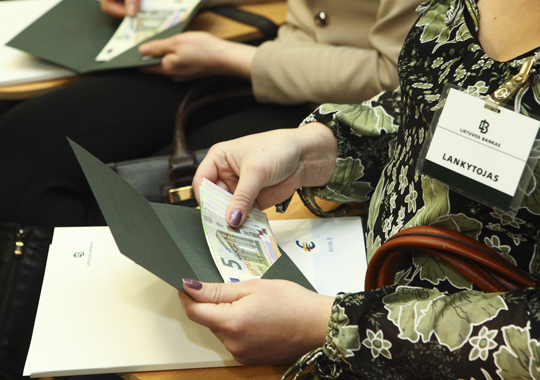
Photo by Dainius Labutis (ELTA)
During the seminars, general information on the euro adoption process was presented, special publications from the Bank of Lithuania and of the European Central Bank were handed out, and additional methodical video material was provided.